


16 Nov 2026
Alcoholism use disorder (AUD) often known as alcohol dependence or alcoholism is a medical condition. The disorder changes the way the brain reacts to alcohol, it makes it incredibly difficult to stop drinking despite there being harmful consequences. It changes the reward system as well as the decision making system which is why it can require more support than just personal determination or will power.
In England 608,000 adults are dependent on alcohol only a small amount receive treatment. 9,809 alcohol-specific deaths were registered in the UK in 2024. Alcoholism is curable, with support, medical care and therapy these help to build long-term recovery. Research on the advantages of combining therapies shows that treatment works best when catered to the individual and not a generic approach.
Lester Morse, Director of Rehabs UK, says: "One of the biggest misconceptions we see is that there is one 'best' treatment for alcohol addiction. In reality, successful recovery comes from matching the right treatment to the right person. Someone with severe physical dependence will have very different needs from someone who has developed problematic drinking over a shorter period. Recovery isn't about finding a magic solution—it's about creating a personalised treatment plan that addresses both the physical and psychological aspects of addiction."
Within this blog, it will explain what the most effective treatments are as well as what’s available, how long they take, if and when medication may be an option and how healthcare professionals are able to decide the best and most appropriate support pathway.
Table of contents
- Effective treatments for alcohol dependence
- How long is treatment for alcohol dependence?
- AUD medication explained
- How to choose the right treatment
- Choosing the right AUD care path for you
- Bibliography
- Related articles
Effective treatments for alcohol dependence
It’s important to realise that no treatment will work for everyone. Alcoholism is complex and should be treated on an individual case by case basis. The best option is to get a personalised treatment plan from a healthcare professional which will be based on medical history, physical dependence, mental health and recovery goals.
Evidence from the National Institute for Health and Care Excellence (NICE) and the NHS shows that the most successful treatment plans address both the physical and psychological aspects of addiction. The first step which is often a detox aids the body to become alcohol-free however, long-term recovery may require managing triggers, treating the underlying causes of drinking and learning coping strategies. This is why a personalised treatment plan is the best option for recovery as it combines the alcohol detox with ongoing support and treatment to achieve a stable recovery.
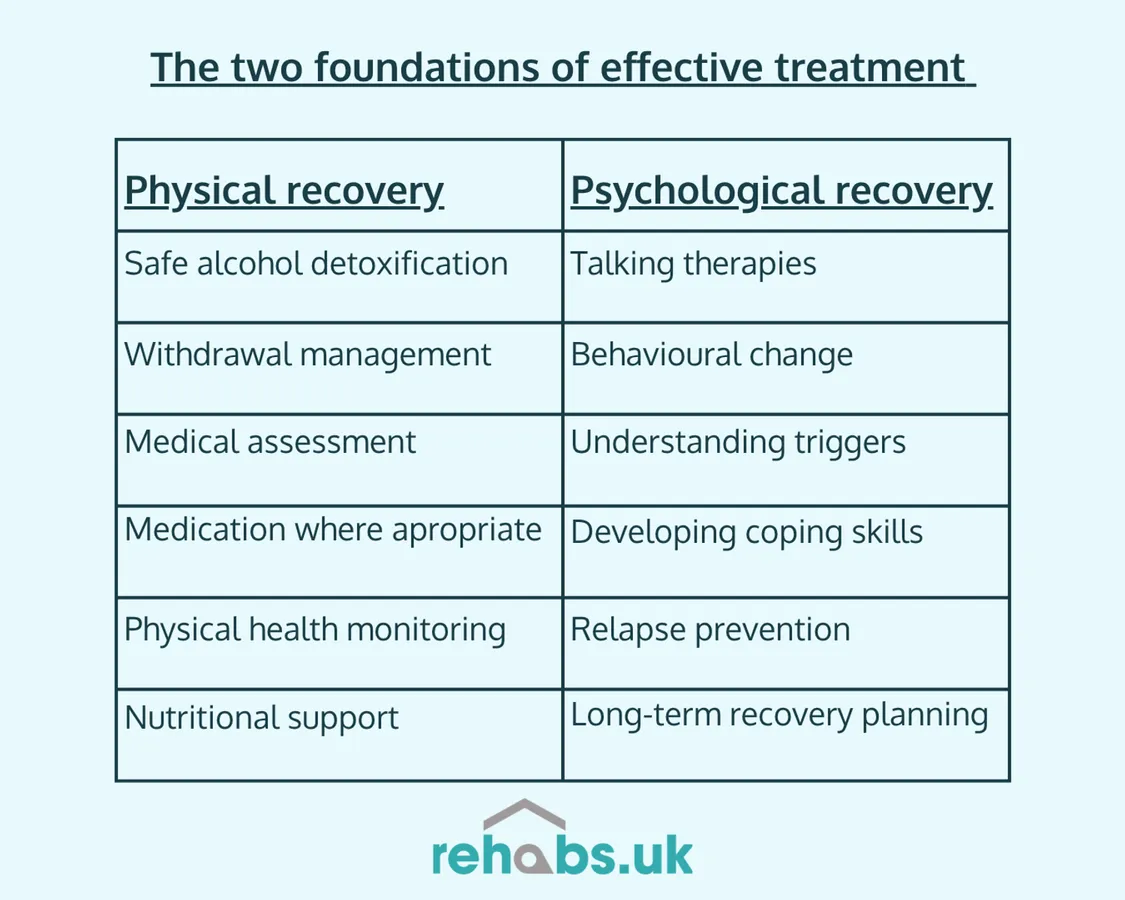
Source: Rehabs UK
Making a full recovery is more than just the detox. If you don’t address the reason why the individual is drinking in a destructive way then it might be more likely that they will relapse. This could be due to not learning or knowing the coping mechanisms when dealing with a certain situation such as anxiety, stress or the overwhelmingness of life.
There is research on the advantages of combing therapies that shows for the appropriate individuals that a combination of medication and behavioural therapies create the better outcomes than either treatment on its own.
Lester Morse explains: "Recovery isn't measured by how quickly someone stops drinking; it's measured by how well they build a life they no longer want to escape from. The people who do best are usually those who continue engaging with support long after detox has finished. That's where lasting recovery is built."
Medical alcohol detox
Detox is the first stage for many who have become physically dependent on alcohol. The withdrawal can be mild such as anxiety and shaking however, it can be extreme and be life-threatening such as seizures or delirium tremens (DTS). Due to these risks its vital that anyone considering stopping alcohol should seek medical advise from a professional before.
A medically managed detox usually involves:
- A clinical assessment of withdrawal risk
- Prescription medication (typically chlordiazepoxide or diazepam) to reduce withdrawal symptoms
- Monitoring by healthcare professionals
- Nutritional support, including thiamine (vitamin B1), to reduce the risk of neurological complications
- A gradual reduction in medication over several days
Psychological therapies
- CBT – This type of individual therapy identifies emotions, thoughts and behaviours that play a role in drinking. The person involved will learn techniques to manage unclear thinking patterns, cravings and reduce relapse risk
- MET – This type of therapy is to enhance the individual’s motivation for change. During a therapy session the therapist or counsellor will help them explore their own reasons for stopping alcohol rather than telling them what they should be doing.
- Family therapy – Family therapy can aid improved communication with those closest around the individual. Addiction can affect family, friends and children and this type of therapy can help rebuild trust and create a more supportive and a safer environment for recovery.
How long is the treatment for alcohol dependence?
The length that treatment takes for alcohol dependence completely depends on the individual. There isn’t a fixed timeline due to alcohol use disorder (AUD) affects everyone differently.
If you are trying to get an idea of how long it may take for you or your loved one the length of treatment is usually influenced by factors such as:
- Level of physical dependence
- Mental and physical health
- How long have you been drinking heavily
- Other substance use disorders
- Any previous attempts to quit drinking
- What your home environment is like
- If there is a reliable support network
An example of one individual experience with treatment could be:
They have a medical detox from alcohol for a week at a residential rehabilitation centre. This is then followed by counselling and group therapy work within the rehab. They may benefit from a longer more structured routine to build up confidence when looking at their addiction and how to deal with that in the real world. Therefore, they stay at the residential rehab for a month or 2. They receive continued long-term aftercare. This is the best way for this person to achieve meaningful recovery.
As mentioned above this is not the way for everyone. Someone may need a lot less support and are able to home detox and have counselling for a structured 6 weeks. It is completely tailored to the individual. It is key to understand that recovery has to be worked on every day, it is a process rather than having the treatment and a fixed end date.
The NHS and NICE recommend that treatment plans are regularly reviewed and adapted as recovery progresses, rather than following a one-size-fits-all timeline.
The table below outlines average treatment lengths based on NHS guidance, NICE recommendations and common clinical practice
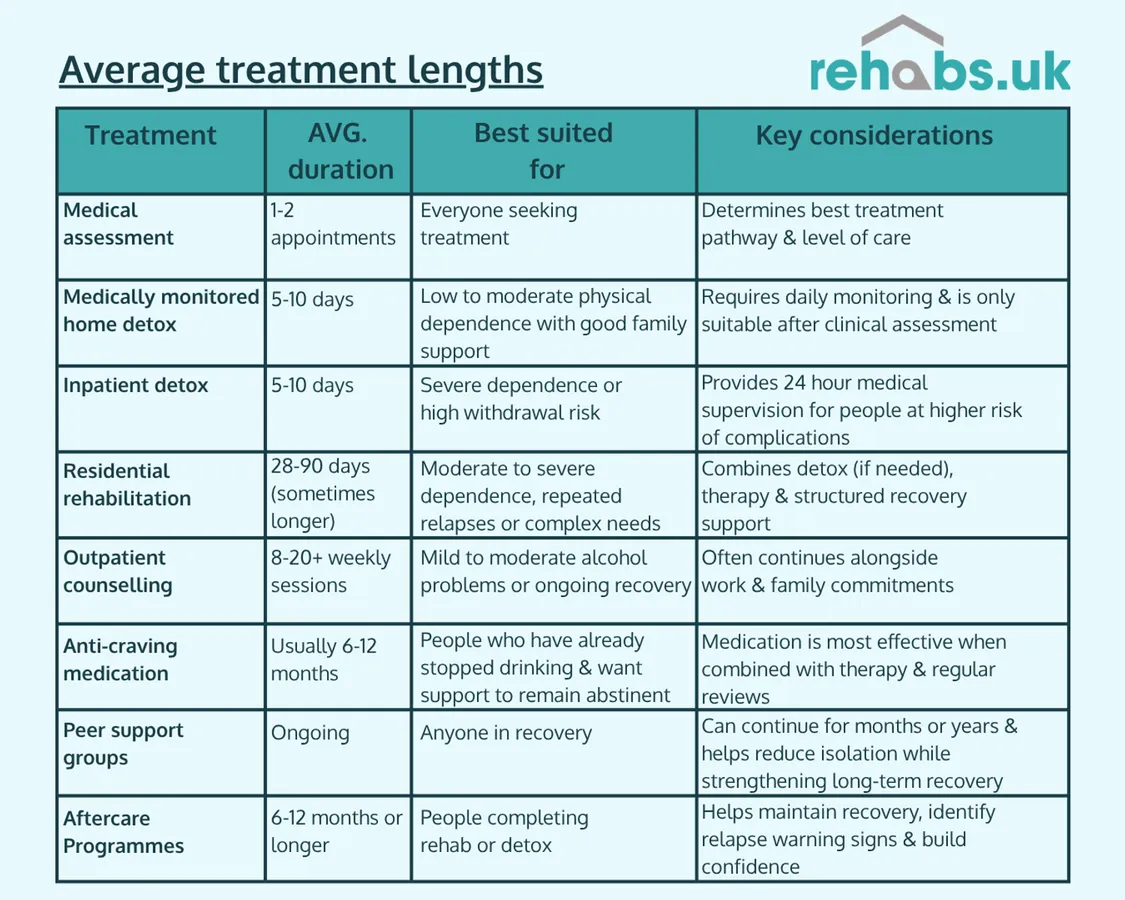
Source: Rehabs UK
AUD medication explained
Medication isn’t the cure to Alcohol use disorder however, it can support recovery by easing cravings, reducing the reward of drinking and in some cases discouraging alcohol consumption altogether.
A common misconceptions is that there a magic pill that will cure addiction. The complexity of alcoholism with its connections to the brain, emotional wellbeing and behaviour mean that this pill doesn’t exist. Medication is best when combined with medical support, psychological therapies and ongoing aftercare.
NICE recommend medication with a comprehensive treatment programme, targeted towards those who have completed detox and want support to maintain sobriety.
Lester Morse, Director of Rehabs UK, says: "Medication can make recovery feel more manageable, but it isn't a replacement for understanding why someone drinks. The people who tend to have the best outcomes use medication as one part of a wider recovery plan that includes therapy, support and lifestyle changes."
There are four main medications which are used to treat alcohol use disorder, these are outlined below:
Acamprosate (Campral)
Acamprosate is best for maintaining abstinence after detox. It works by helping the brain to recover after long-term use. It is one of the most commonly used in the UK. It can help those experiencing heightened anxiety, irritability, poor sleep and cravings whilst the brain is recovering. It is usually prescribed after someone has detoxed and helps to restore the balance between GABA and glutamate activity this can reduce the physical discomfort associated with relapse.
Benefits
- Reduces cravings in some people
- Helps maintain abstinence
- Non-addictive
- Can be taken for several months or longer under medical supervision
Things to know
- Usually taken three times a day.
- Not suitable for people with severe kidney disease.
- Does not prevent intoxication if alcohol is consumed.
Naltrexone
This medication is best for reducing the rewarding effects of alcohol and helping prevent relapse. Naltrexone is different to acamprosate. It blocks opioid receptors involved in the brains reward system rather than acting on GABA and glutamate.
This means that normally consuming alcohol triggers the release of endorphins which creates the euphoria feelings. Naltreone decreases this response which means that to the individual alcohol will feel less rewarding to drink. As time goes on this can help weaken the learned behaviour of association between alcohol and reward.
NICE recommend naltrexone for those successful in detoxing and are accessing psychological support.
Benefits
- May reduce heavy drinking
- Can reduce cravings
- Helps lower relapse risk
- Usually taken once daily
Things to know
- Cannot be taken while using opioid painkillers.
- Liver function may need monitoring before and during treatment.
- Works best alongside behavioural therapy.
Disulfiram (Antabuse)
Disulfiram is suited towards those individuals that are highly motivated and want a strong deterrent against drinking. Disulfiram is completely different to other alcohol medications. It blocks one of the enzymes which help the liver to break down alcohol into harmless substances. This causes acetaldehyde to build up when alcohol is consumed.
This leads to unpleasant symptoms, including:
- Flushing
- Nausea and vomiting
- Headache
- Rapid heartbeat
- Sweating
- Dizziness
Due to the possible side effects of taking disulfiram, it is only recommended to take after having a full assessment and under medical supervision. It is a psychological deterrent causing a consequence for consuming alcohol. It doesn’t reduce cravings.
Benefits
- Can support abstinence in motivated individuals
- Helps reinforce commitment to recovery
- Often works well when supervised by a family member or healthcare professional
Things to know
- Alcohol must be completely avoided, including in some mouthwashes, cooking ingredients and medicines.
- Not suitable for everyone, particularly people with certain heart or liver conditions.
- Requires careful monitoring.
Nalmefene (Selincro)
Nalmefene is best for those who want to reduce consumption not stop it immediately.
This medication acts on opioid receptors in a similar way to naltrexone, by reducing the reward created by drinking alcohol and in turn heavy drinking sessions are less likely.
This should always be in combination with psychosocial support. As Lester Morse explains:
"Medication can reduce cravings or remove some of the temptation, but it can't replace learning new ways of coping with life's challenges. That's why we always encourage people to combine medical treatment with therapy and long-term support. Recovery is about changing your relationship with alcohol, not simply removing the alcohol itself."
The medication isn’t the cure, it’s just a recovery support tool which is suitable for some people. However, this needs to be used with other treatment methods to get to the root of the addiction rather than masking it.
If you or someone you know is struggling with alcohol use disorder please don’t hesitate to contact our Treatment Advisors today!
Source: Rehabs UK
How to choose the right treatment
The right treatment depends on the right level of care for the individual. Taking into consideration psychological needs, personal circumstances and physical health.
Government data suggests around 50% complete treatment alcohol-free, but relapse risk remains high within the first year.
Notably:
- 65–80% may relapse within 1–3 years (varies widely by severity and engagement).
- After 5 years of sustained sobriety, relapse drops to roughly 15%.
People who remain engaged in treatment for at least three months generally have significantly better long-term outcomes than those who leave treatment early.
Lester Morse, Director of Rehabs UK, says: "The right treatment isn't necessarily the most intensive or the most expensive. It's the one that gives someone the greatest chance of recovering safely while fitting around their individual circumstances. Recovery isn't one-size-fits-all, and treatment shouldn't be either."
The most common things to do when choosing the right treatment:
- Seek professional guidance: Consulting with a healthcare provider or a specialist like Rehabs UK can provide valuable insights and personalised recommendations.
- Consider the level of care: Some individuals may require inpatient treatment, while others can benefit from outpatient programmes. Assess your specific needs.
- Support systems: Evaluate the support available from family, friends, and support groups, as a strong support system can significantly contribute to success.
Rehabs UK Treatment advisors are able to help find the best options for you or your loved ones making it easier to talk through all the needs and treatments available.
Understanding inpatient and outpatient care paths
Deciding whether you need inpatient or outpatient care can depend on the individuals situation. There isn’t one option which is better than the other but decided upon the level of dependence, medical needs and the living environment.
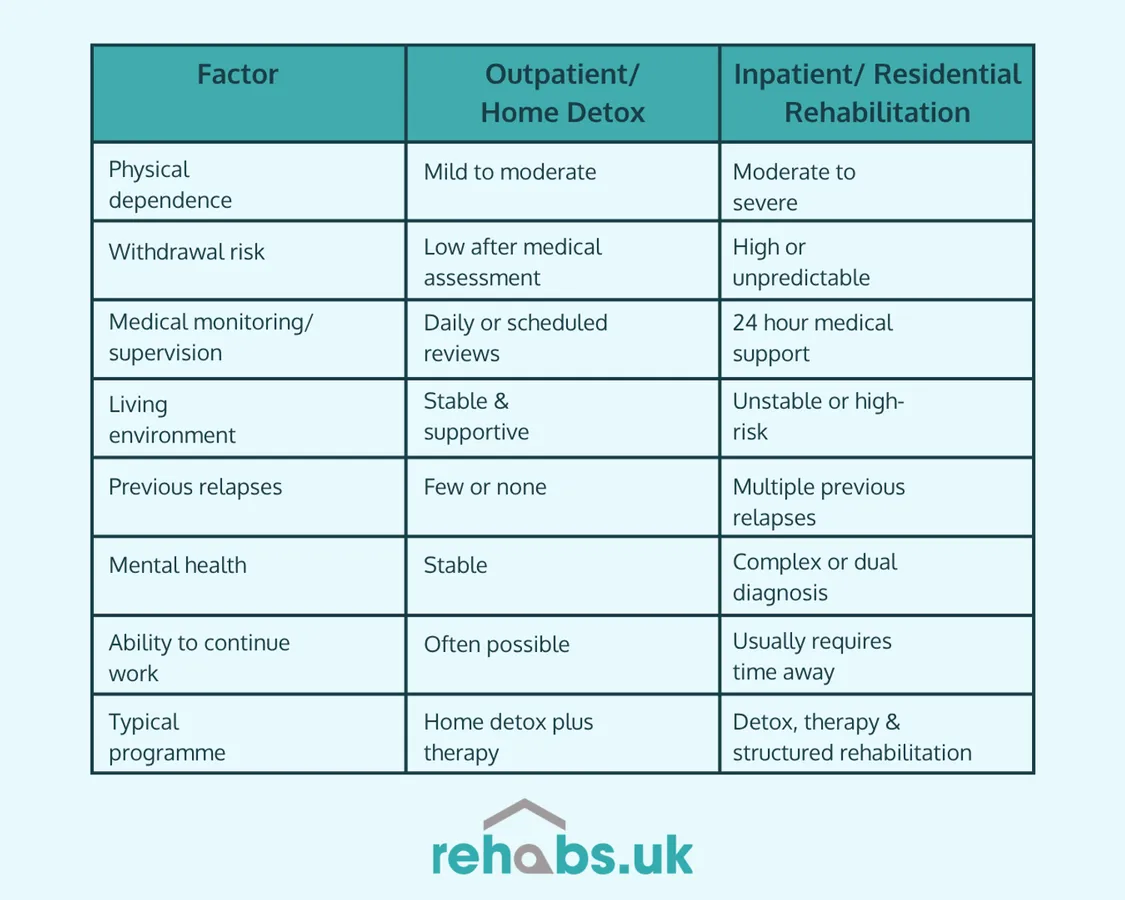
Source: Rehabs UK
Choosing the right AUD care path for you
There isn’t just one best treatment for alcohol use disorder as everyone’s body reacts differently.
What matters most is receiving the right treatment at the right time.
Successful recovery usually combines several elements:
- A comprehensive medical assessment
- Safe management of withdrawal symptoms
- Evidence-based psychological therapy
- Medication where clinically appropriate
- Helpful family involvement
- Relapse prevention planning
- Long-term aftercare and peer support
Lester Morse concludes: "Asking for help is often the hardest step, but it's also the most important. We've supported people from every walk of life, and one thing they all have in common is that recovery became possible once they found a treatment plan that suited them. You don't have to figure it out on your own."
Detoxing is just the start of recovery. It doesn’t end after or when you leave rehab it continues into everyday life. It’s something that you have to navigate by creating new routines and structures, coping mechanisms, staying connected to the recovery community and support as well as strengthening relationships. Research shows that those who continue with aftercare and support groups are more likely to maintain long-term recovery.
Rehabs UK can provide an initial confidential chat about any concerns and then offer a free assessment to find the best treatment specialised to the individual. This could include home detox, therapy, residential rehab or ongoing recovery support. Don’t hesitate to contact our Treatment Advisors today.
Bibliography
- National Institute for Health and Care Excellence (NICE). Alcohol-use disorders: diagnosis, assessment and management of harmful drinking and alcohol dependence (NG115).
- NHS. Alcohol misuse – Treatment.
- Office for Health Improvement and Disparities (OHID). Adult substance misuse treatment statistics 2023 to 2024.
- Office for National Statistics (ONS). Alcohol-specific deaths in the UK: registered in 2023.
- British National Formulary (BNF). Drugs used in alcohol dependence.
- Cochrane Library. Psychosocial and pharmacological interventions for alcohol dependence.
- NHS England. Alcohol Care Teams and specialist alcohol services.