


04 Aug 2026
Depression and alcohol have always been linked closely. They reinforce each other in certain ways that become increasingly challenging to escape without support. According to NHS England and Alcohol Change UK, abusing alcohol can worsen existing mental health problems and contribute to the development of new ones. In a survey commissioned by Alcohol Change UK, over half of people who drink alcohol (53%) said they did so for a mental health reason. This could include feeling anxious, stressed or worried, feeling bored, having trouble sleeping, or feeling sad or low (at least once in the past six months).
Drinking is traditionally used by people as a way to manage emotions. This could be something like emotional pain, trauma, stress, low mood, or something positive, such as a celebration. However, due to alcohol being a depressant, repeated use often intensifies depressive symptoms over time. This can quickly become a cycle as alcohol worsens mental health, and worsening mental health drives the individual to drink more.
As Director of Rehabs UK, Lester Morse, explains, “Trying to treat depression with alcohol may in the short term offer some relief, but in the long term it’s sure to make it worse as it takes a toll on your body and introduces other difficulties to your life.”
This article explores the connection between alcohol and depression, why dual diagnosis treatment matters, and how people can begin breaking the cycle with the right support.
Table of contents
- How alcohol and depression feed each other
- The importance of dual-diagnosis and integrated care
- Breaking the cycle
- Get expert support from Rehabs UK
- Bibliography
How alcohol and depression feed each other
Often, people may describe alcohol as helping them ‘turn off ‘ or ‘switch off’ from difficult emotions. There is truth to this claim, as initially it may temporarily reduce feelings of loneliness, stress or anxiety due to the effect on neurotransmitters like dopamine and GABA in the brain.
On the other hand, repeated drinking can change the brain's chemistry, increase emotional instability, disrupt sleep, and reduce the brain's natural ability to regulate mood. Nearly one-third of individuals with major depression also struggle with alcohol. According to Mind UK, alcohol can intensify low mood, increase impulsivity and contribute to suicidal thoughts, particularly when used frequently or in large amounts.
The cycle of drinking and depression
- A person feels depressed, anxious, overwhelmed or emotionally numb
- They drink alcohol to feel temporary relief
- Alcohol disrupts brain chemistry and lowers mood further
- Sleep, motivation and emotional resilience decline
- Problems at work, home or in relationships increase
- Feelings of guilt, hopelessness or anxiety intensify
- Alcohol is used again to cope with worsening symptoms
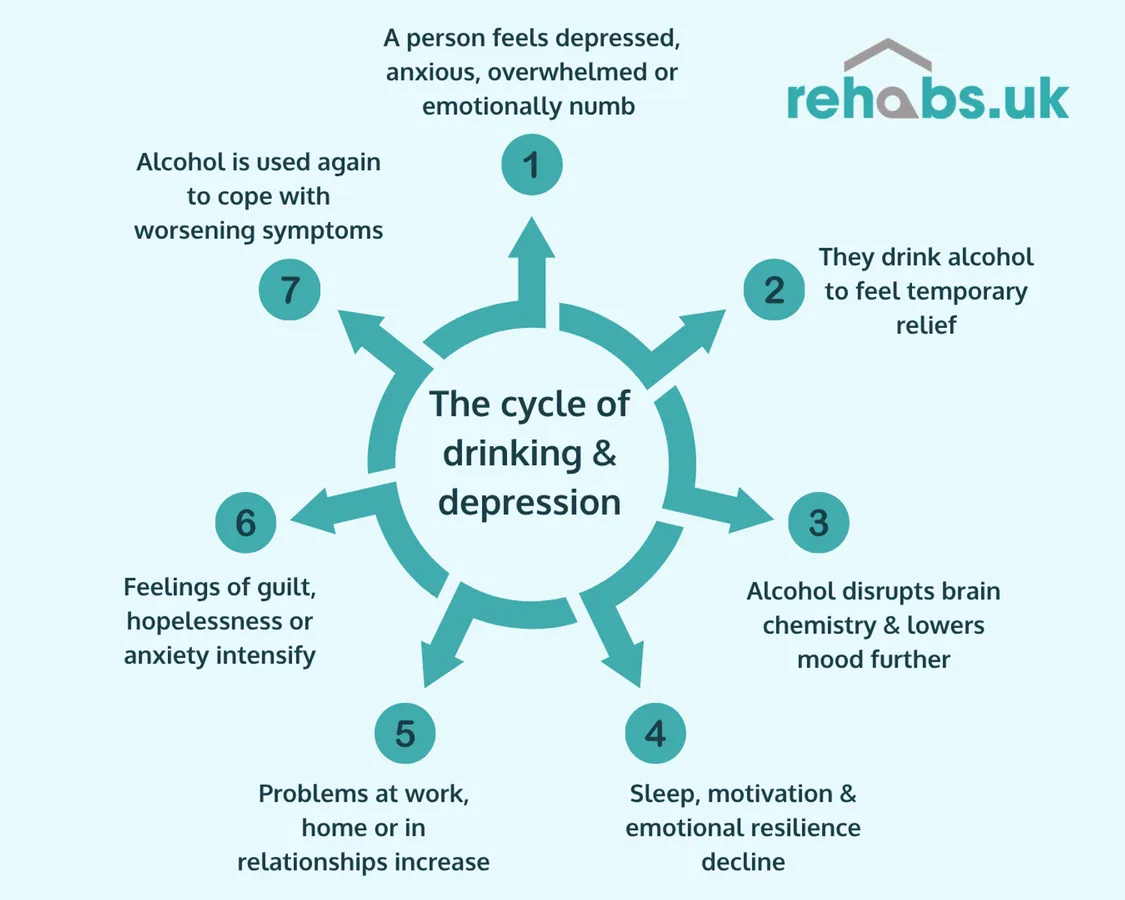
Source: Rehabs UK
Real-world examples of the cycle
- Someone struggling with loneliness drinks every evening to “relax”, but eventually becomes more isolated and withdrawn
- A person with depression drinks heavily to sleep, but alcohol disrupts REM and leaves them more exhausted and emotionally unstable the next day
- Someone experiencing anxiety drinks socially to feel confident, but gradually develops dependence and worsening panic symptoms
Lester Morse states “There is an old Chinese saying Alcohol gave me the wings to fly but then it took away the sky! If you have a problem when you drink alcohol, you will believe you have found the most wonderful solution until it turns bad, then it seems impossible to stop."
How alcohol feeds depression
Research from Drinkaware shows alcohol can contribute to:
Low mood and emotional numbness
- Increased anxiety and irritability
- Poor sleep quality
- Fatigue and low motivation
- Social withdrawal
- Feelings of shame and guilt
- Increased suicidal thoughts
Heavy drinking can also damage relationships, finances, physical health and self-esteem, all of which contribute to worsening depression.
Lester Morse comments:
“Apart from the fact that alcohol itself is a depressant, the stress it puts on the body coupled with the chaotic, traumatic and often humiliating lifestyle, it’s quite a depressing lifestyle.”
Alcohol and sleep disruption
Alcohol can, for many people, make them feel ‘sleepy’; however, it significantly disrupts restorative sleep cycles. Over time, this can worsen depression symptoms, stress tolerance, emotional resilience, anxiety levels and concentration and memory.
The Sleep Foundation notes that alcohol suppresses REM sleep and increases fragmented sleep, often leaving people more emotionally vulnerable the following day.
How depression feeds alcoholism
Common reasons people with depression may turn to alcohol include:
- Wanting relief from sadness or hopelessness
- Trying to reduce social anxiety
- Escaping traumatic memories
- Coping with loneliness or grief
- Using alcohol to sleep
- Emotional numbness and low self-worth
According to the Office for National Statistics (ONS), alcohol-specific deaths in the UK in 2024, 9,809 deaths from alcohol-specific causes were registered in the UK reflecting growing concern around problematic drinking and unmet mental health needs.
“When the regular folk and the heavy drinker are given sufficient reasons to stop or moderate, they can maybe with some minor help, but the alcoholic can’t stop no matter how bad it gets or how hard they try.”
Which condition comes first?
There is continued debate to whether the addiction or the mental health condition comes first. Ultimately it is different for everyone and is really personal for each individual.
As Lester Morse explains:
“It’s complex and different for every person, plus there are so many people who suffer from it every combination usually exists. Having said that, I believe you are born potentially alcoholic. Not everyone, everything comes after. That's why until the alcoholic problem is sorted out nothing else gets better.”
The importance of dual-diagnosis and integrated care
According to the National Institute for Health and Care Excellence (NICE), people with co-occurring alcohol misuse and depression benefit most from coordinated treatment that addresses both conditions together.
“When the alcoholism is successfully treated, a vast number of those dual diagnosis issues disappear and what’s left can then be better diagnosed and treated.” - Lester Morse, Director of Rehabs UK
If an individual stops drinking but doesn’t treat the depression, trauma, or anxiety, then emotional distress can quickly trigger a relapse.
This can also work the other way. For example, with anti-depressants, the medication may be less effective if someone continues to drink heavily. This can be due to alcohol interfering with the effectiveness and increasing side effects.
Integrated treatment approaches may include:
- Medically supervised detox
- Cognitive behavioural therapy (CBT)
- Trauma-informed counselling
- Psychiatric assessment
- Peer support groups
- Medication management where appropriate
- Relapse prevention planning
Breaking the cycle
It is possible to make a full recovery. The best way to do this requires the individual to address both the alcohol misuse and the mental health condition together.
The NHS warns that severe alcohol withdrawal can lead to seizures or delirium tremens in some individuals.
As Morse mentions:
“The medication doesn’t actually fix people without other treatments and therapy. Professional detox is the best way to break the cycle, there is a higher chance of success in recovery and breaking the link between depression and drinking”
Rebuilding emotional resilience
“We live in a wonderful world with many different methods of treatments, from jumping in ice baths to eating healthier, meditation, walking and going to the gym.” Morse explains. “For me and many people I’ve worked with, we have found ways to work on improving our mental health and lifestyles. It’s not always easy and all the problems don’t simply go away, but if you’re willing to search, you can find pretty effective support to help get along ok in the world.”
Research from Mental Health Foundation shows regular physical activity can significantly improve symptoms of depression and anxiety.
Helpful lifestyle changes may include:
- Regular exercise
- Improved sleep routines
- Mindfulness and meditation
- Peer support groups
- Structured daily routines
- Reducing isolation
- Nutritional support
Building long-term support networks
Recovery thrives with community and connections. Being able to build long-term support networks is key to long term recovery success. It is rarely sustainable in complete isolation, and without support, the risk of relapse could increase.
Support networks may include:
- Family support groups
- Alcoholics Anonymous (AA)
- SMART Recovery
- Therapists and counsellors
- Recovery communities
- Sober living environments
Get expert support from Rehabs UK
The cycle of depression and alcohol misuse can become complicated. In some situations, it may feel impossible to break, especially alone. The temporary relief found in alcohol will eventually worsen emotional health and create a dependency over time.
The best and most effective way to approach recovery is to treat both conditions, the mental health and the substance. By treating them together through integrated support, therapy, and long-term recovery planning, the chance of success is higher.
At Rehabs UK, our Treatment Advisors can help to advise and explore treatment options tailored to your needs, including detox support, therapy, residential rehab and aftercare services.
If you or someone you know is struggling with alcohol misuse and depression, do not hesitate to contact our friendly team today.
Bibliography
- NHS – Alcohol Support
- Alcohol Change UK – Alcohol and Mental Health
- Mind UK – Alcohol and Mental Health
- NICE Guidance on Alcohol-use Disorders
- Office for National Statistics – Alcohol-specific deaths
- Sleep Foundation – Alcohol and Sleep
- Mental Health Foundation – Exercise and Mental Health