


02 Nov 2026
Functioning alcoholism (AUD) has a dangerous idea at its core. If an individual maintains a successful career and a stable home life, their addiction is clearly being managed, when this is not the case.
Because these individuals bear little resemblance to stereotypical notions of "rock bottom", or because of their gender, there is a danger that their struggle remains largely invisible to the outside world.
Meanwhile, maintaining the gap between outward competence and internal dependence inflicts ongoing damage, particularly on their mental health.
Official estimates indicate that there are 608,416 alcohol dependent adults in England. What this figure doesn’t show is how social acceptance of drinking culture could be making it possible for many more functioning alcoholics to miss out on the support they need.
- The psychological weight of a double life
- How the brain justifies the ‘need to drink’
- How to recognise the signs
- Breaking the cycle doesn’t have to be done alone
- Bibliography
- Related articles
The psychological weight of a double life
The defining characteristic of what is considered to be functioning alcoholism is the demand to maintain a public persona, while privately relying on alcohol to regulate their emotional baseline.
Functioning alcoholism crosses social groups and professions, and while some sufferers in the public eye have come forward to share their stories, including US journalist Caroline Knapp and broadcaster Adrian Chiles, many choose to keep their struggle private.
The continuous effort to appear ‘normal’ while managing addiction can be draining and leaves individuals in an unsustainable situation, leading to emotional exhaustion, worsening mental health and a deep sense of loneliness. As Rehabs UK Director, Lester Morse, explains:
"I don’t think there is such a thing as a functioning alcoholic. I think it would be better said as an alcoholic who is presently functioning, because it’s only a temporary state."
Chronic exhaustion
Source: Rehabs UK
Research from Alcohol Change shows 24% of drinkers report alcohol negatively affecting their mental health, and 30% state it harms sleep quality. With figures like this for adults who are not drinking to a dangerous degree, it can be easy to see how functioning alcoholics may find that they operate in a near-constant state of physical and emotional depletion.
This is not helped by the fact that, despite the assumption that it helps someone relax, alcohol disrupts sleep quality by interfering with restorative REM sleep and increasing night-time waking.
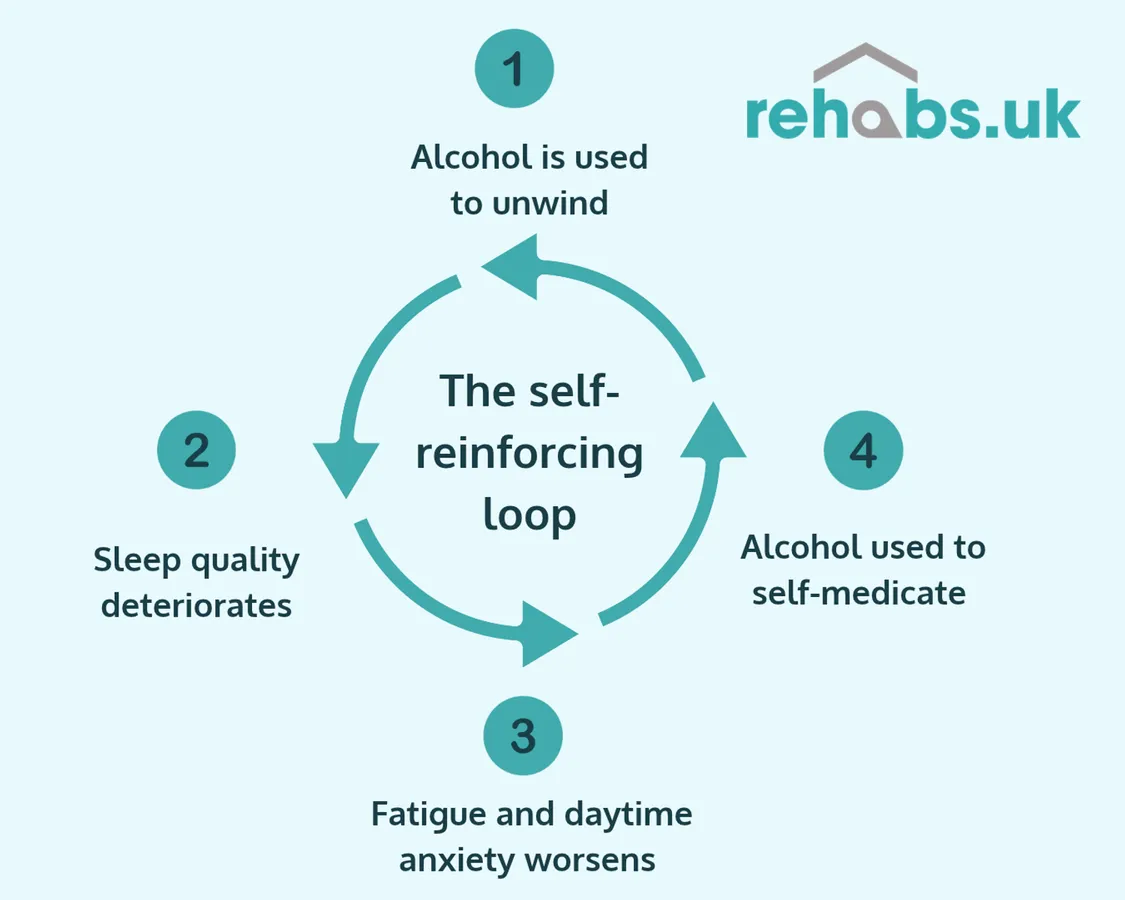
Over time, this disruption creates a self-reinforcing loop:
- Alcohol is used to unwind
- Sleep quality deteriorates
- Fatigue and daytime anxiety worsen
- Alcohol used to self-medicate
Performance anxiety
High achievers operating in pressured environments frequently experience imposter syndrome, which alcohol can temporarily cover. A 2025 study by the US biomedical journal Alcohol, found a correlation between imposter syndrome and alcohol consumption among graduate students. This indicates a potential pathway that sees functional alcoholism begin in university and continue into their career.
Corporate settings can sometimes make masking dependency easier by using alcohol for celebrations and work events. Organisations seeking to address these cultural patterns can consult our guide on supporting employees with alcohol and drug issues and review strategies for managing alcohol use in remote and hybrid work environments.
The burden of keeping secrets
Maintaining an illusion of control requires a relentless, exhausting campaign of keeping secrets from loved ones.
This habit is already culturally widespread. In fact, a 2019 YouGov survey found that over a quarter (27%) of UK adults have lied about their drinking habits, with 37% hiding the truth from their partners and 32% not being honest with their colleagues. Similarly, a 2025 study by Confused.com found that 38% admit to lying about alcohol consumption on medical forms due to embarrassment, anxiety and a fear of judgment.
While minor dishonesty can be easy to dismiss, living with and maintaining a deception constantly could force individuals into a deeper emotional isolation. This could result in increased distance from colleagues or loved ones to prevent them from noticing mood changes.
As Rehabs UK Director Lester Morse explains:
“The anxiety of being exposed is often overwhelming. On top of life’s usual stresses, this level of stress can lead to not only more drinking but also a host of other physical and mental disorders. The hiding starts off mild and increases over time. Eventually it feels like it’s about survival”.
How the brain justifies the ‘need to drink’
Source: Rehabs UK
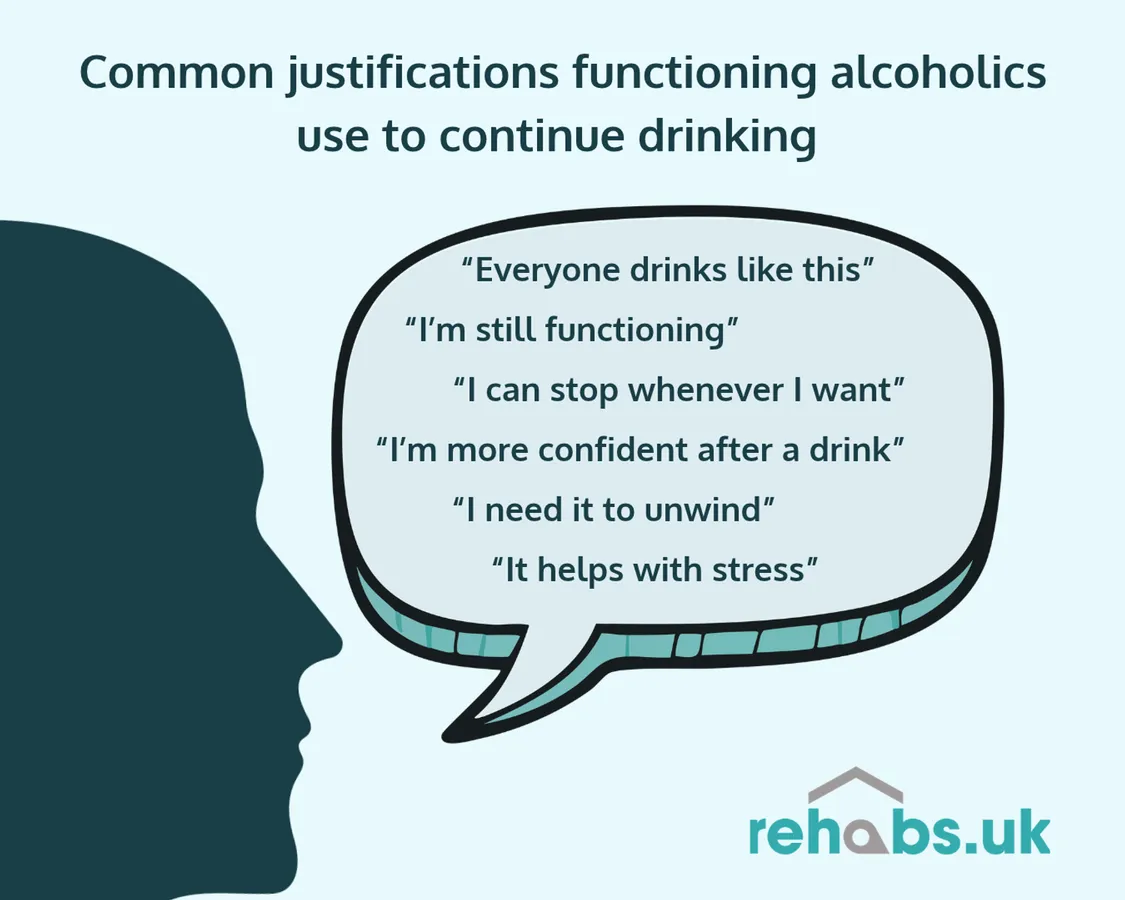
The transition from social drinking to dependent drinking comes through rationalisation. The brain becomes highly skilled at creating explanations for continued drinking to build a false perception of control:
- Rule-based denial: "I never drink before 5 pm," or "I only drink expensive wine/spirits".
- The functional fallacy: "I received a promotion and paid my mortgage on time, so my drinking isn't a problem".
- External comparison: Comparing consumption to stereotypically extreme examples to downplay their activity.
Over time, alcohol can alter reward pathways within the brain. This can affect how dopamine, stress regulation and emotional processing are managed. Part of this is the development of an association between alcohol and feeling safe or confident, which makes the idea of no longer drinking feel psychologically threatening.
These defense mechanisms indicate why high-functioning alcoholics may choose to suffer in silence for years before seeking treatment. To understand how these behavioral patterns form a physiological loop, read our article on understanding the cycle of alcohol addiction.
How to recognise the signs
Source: Rehabs UK
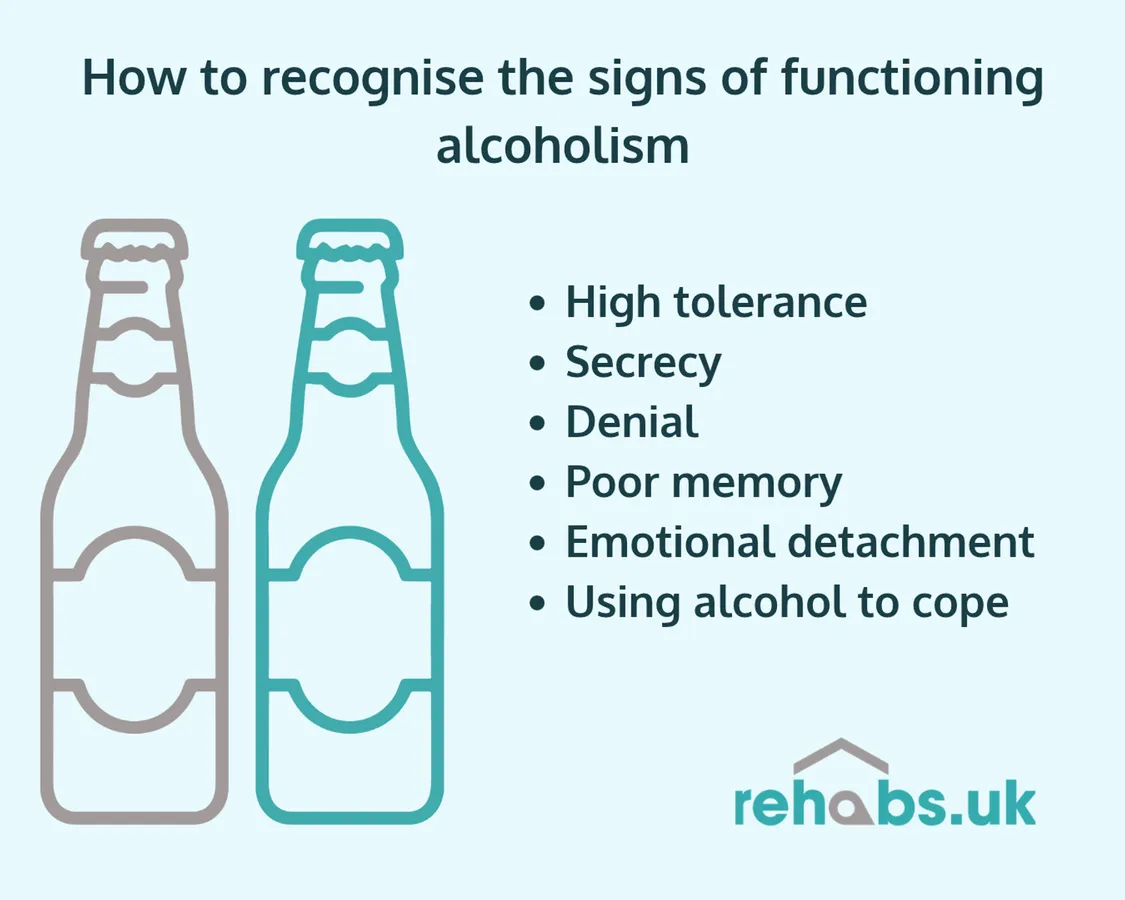
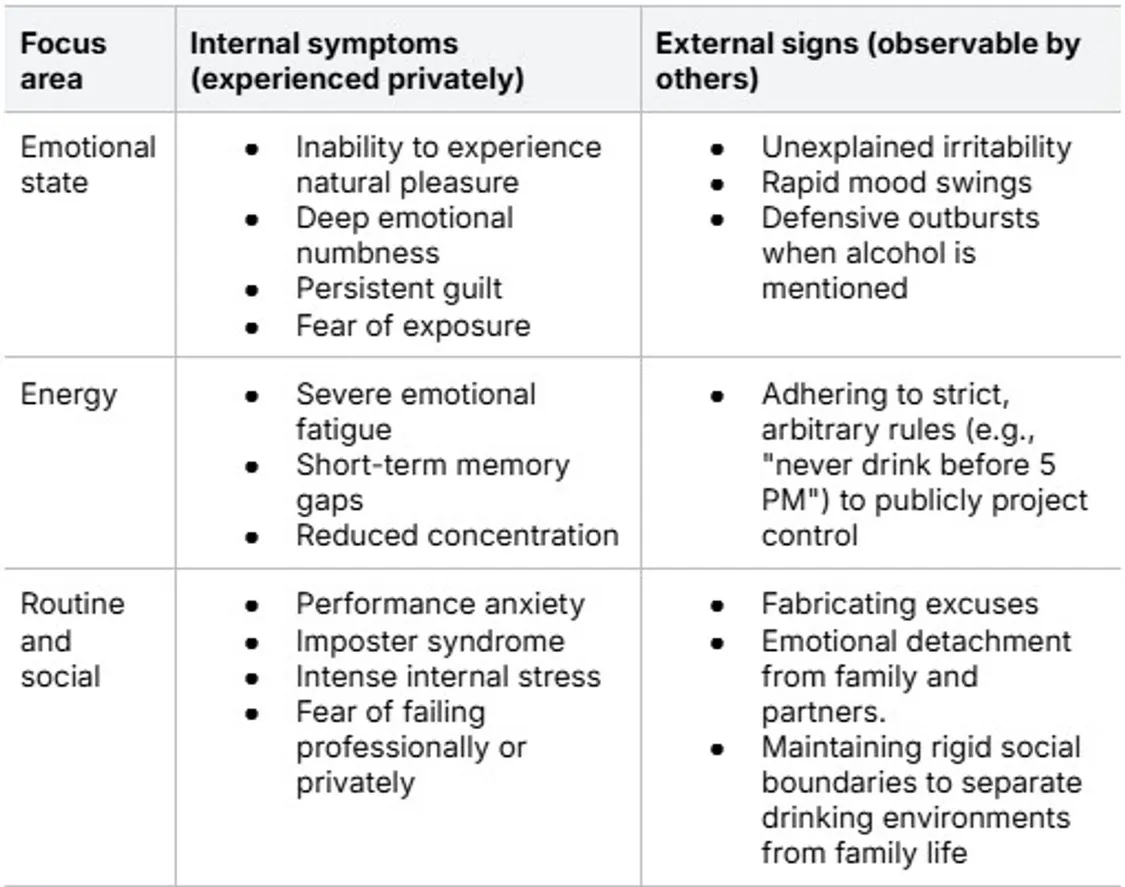
Spotting functional alcoholism can be difficult due to the lack of physical signs. Instead, colleagues and loved ones should shift towards looking for subtle psychological and behavioral indicators that could point to mental health challenges, including depression.
Source: Rehabs UK
“People can become more aggressive, irritable and detached from loved ones, because it’s a progressive illness; it just keeps getting worse.” - Lester Morse. Director, Rehabs UK
The long-term impact on mental health
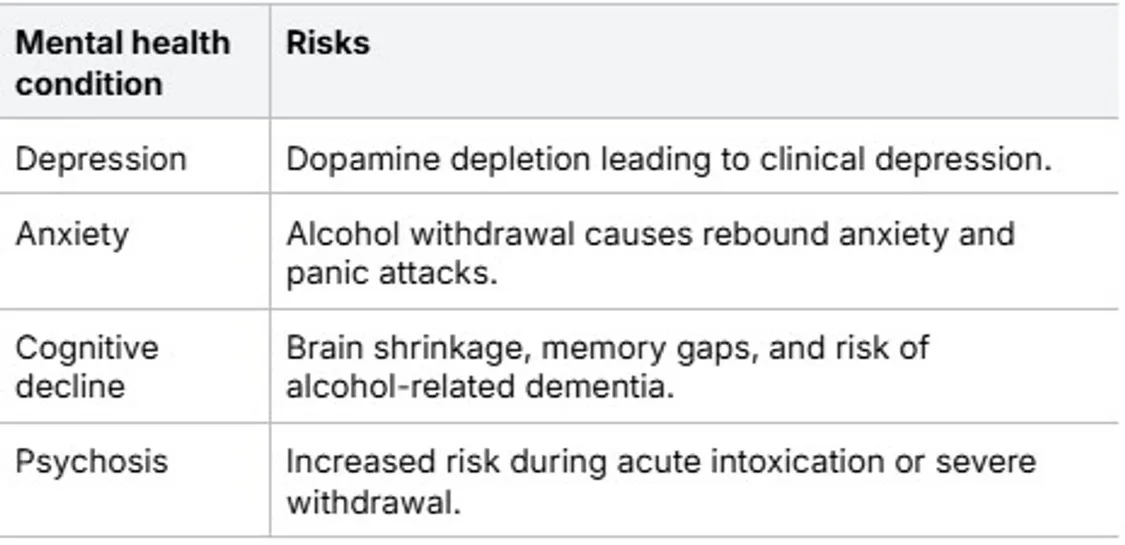
Without support and intervention, untreated functioning alcoholism can have significant long-term mental health consequences.
A common concern for families is how long a functioning alcoholic can live while maintaining this balance. While physical tolerance varies, untreated psychological exhaustion and brain chemistry changes can make ‘functioning’ feel far from sustainable.
Stopping abruptly can be extremely difficult and dangerous due to severe withdrawal symptoms. This is because dependency alters brain chemistry, making professional intervention essential for long-term recovery.
Source: Rehabs UK
“The worse it gets, the more need for relief, the more the drinking increases. It only ever gets worse, never better, until addressed and treated.” - Lester Morse. Director, Rehabs UK
Breaking the cycle doesn’t have to be done alone
Living in a perpetual survival mode takes a severe toll on the mental health of a functioning alcoholic and may feel like a situation that has gone too far. Reaching out for professional help as early as possible is a key step toward regaining control, and should not be seen as a sign of failure.
Because functioning alcoholics often manage significant personal and professional obligations, there may be a reluctance to seek help for fear of revealing their condition to colleagues. For this reason, comprehensive functioning alcoholic treatment plans typically offer structured, confidential support that combines:
- Medically assisted detox: Safe, clinical management of acute withdrawal symptoms.
- Evidence-based therapy: Cognitive Behavioral Therapy (CBT) and Dialectical Behavior Therapy (DBT) to reframe automatic thoughts and address underlying trauma or anxiety.
- Dual-diagnosis care: Concurrent treatment for co-occurring conditions like major depressive disorder or ADHD.
- Flexible rehab options: Outpatient programmes or structured residential rehab designed to accommodate professional commitments.
“When people find their way into treatment, they often say how relieved they are not to try and hide their problem anymore.” - Lester Morse. Director, Rehabs UK
At Rehabs UK, we understand that many people struggling with alcohol dependence are still working, parenting and maintaining responsibilities. Treatment is not reserved for people in crisis. It is available for anyone whose drinking is affecting their wellbeing, relationships or mental health.
If you are concerned about your drinking or need guidance on how to support a high-functioning alcoholic without enabling them, Contact Rehabs UK to speak with our trained treatment specialists and to book a confidential assessment.
Bibliography
- Mind, body, bank balance – why over a quarter of Brits are planning a booze-free January - Alcohol Change UK
- Adrian Chiles 'horrified' at drinking 100 alcohol units a week - BBC News
- Caroline Knapp, 42; Wrote of Alcohol Struggle - LA Times
- Research Snapshot: How alcohol reshapes the brain’s dopamine system long after drinking stops - Vanderbilt University
- Neuroscience: The Brain in Addiction and Recovery - National Institute on Alcohol Abuse and Alcoholism (NIAAA)
- Imposter syndrome and alcohol use among graduate students: An exploratory study- PubMed
Related articles
- Understanding the vicious cycle of drinking and depression
- Supporting employees with alcohol and drug issues
- The Rise of Alcoholism in Women
- The unequal impact of alcohol addiction in the UK
- Understanding the Cycle of Alcohol Addiction
- Alcohol and Sleep: What Problems Can it Cause?
- How to spot alcoholism in your loved one
- Alcohol Addiction Statistics UK
- Cheers or Concerns? Navigating the Drinking Culture in the UK
- Addiction vs Physical Dependence: Understanding the Difference