



18 Aug 2026
Alcohol withdrawal can be dangerous and, in severe cases, life-threatening. Individuals who may have developed a physical dependence on alcohol shouldn’t suddenly stop drinking without appropriate medical support. Unmanaged severe alcohol withdrawal has historically been associated with mortality rates of up to 15% and can cause complications including seizures, severe dehydration, hallucinations, delirium tremens (DTs) and cardiovascular problems.
According to the Office for National Statistics, there were 9,809 alcohol-specific deaths registered in the UK in 2024, equivalent to 14.8 deaths per 100,000 people. Many alcohol-related harms are associated with long-term alcohol dependence and its complications.
In this article, we explain what medically assisted alcohol detox involves, why medical supervision can be important, the withdrawal symptoms and risks it can help manage, and the treatment and support available throughout the detox process.
This highlights the benefits of medically assisted detox in supporting a safer start to recovery. Drawing on guidance from the NHS and the experience of Rehabs UK Director Lester Morse and Senior Treatment Advisor Scott Ardley, we explain what to expect from detox and how appropriate medical and recovery support can help individuals take their next steps towards long-term recovery.
What is a medically assisted detox?
A medically assisted detox is where an individual is detoxing from something but has the support and guidance from medical professionals.
A doctor is the one to instruct the detox and prescribe any medication the individual may need. They will then check up on the individual throughout the detox.
According to Scott Ardley:
“Stopping by yourself can be mentally challenging and people can slip backwards." He continues; “Doing it alone can be a slow process as you can only reduce 5-10% a week to safely let your body adjust to no alcohol. Where as medical detox uses medication which can reduce the withdrawal symptoms and makes things safer and quicker and typically takes 7-10 days to be completely sober. “
At residential rehab there will be 24/7 round-the-clock care available, whereas with a home detox, advisors will just check in every so often.
Medical detox is commonly recommended for people who:
- Drink heavily every day
- Experience withdrawal symptoms when they stop drinking
- Have previously experienced seizures or DTs
- Have underlying physical or mental health conditions
- Have relapsed repeatedly after attempting to quit alone
- Require round-the-clock monitoring during withdrawal
Benefits of medically assisted detox
Medically monitored detox offers:
- Reduced seizure risk
- Safer management of hallucinations and confusion
- Medication to stabilise the nervous system
- Monitoring of blood pressure and hydration
- Faster intervention if complications occur
- Greater comfort during withdrawal
- Increased likelihood of completing detox safely
Home detox vs medically assisted detox
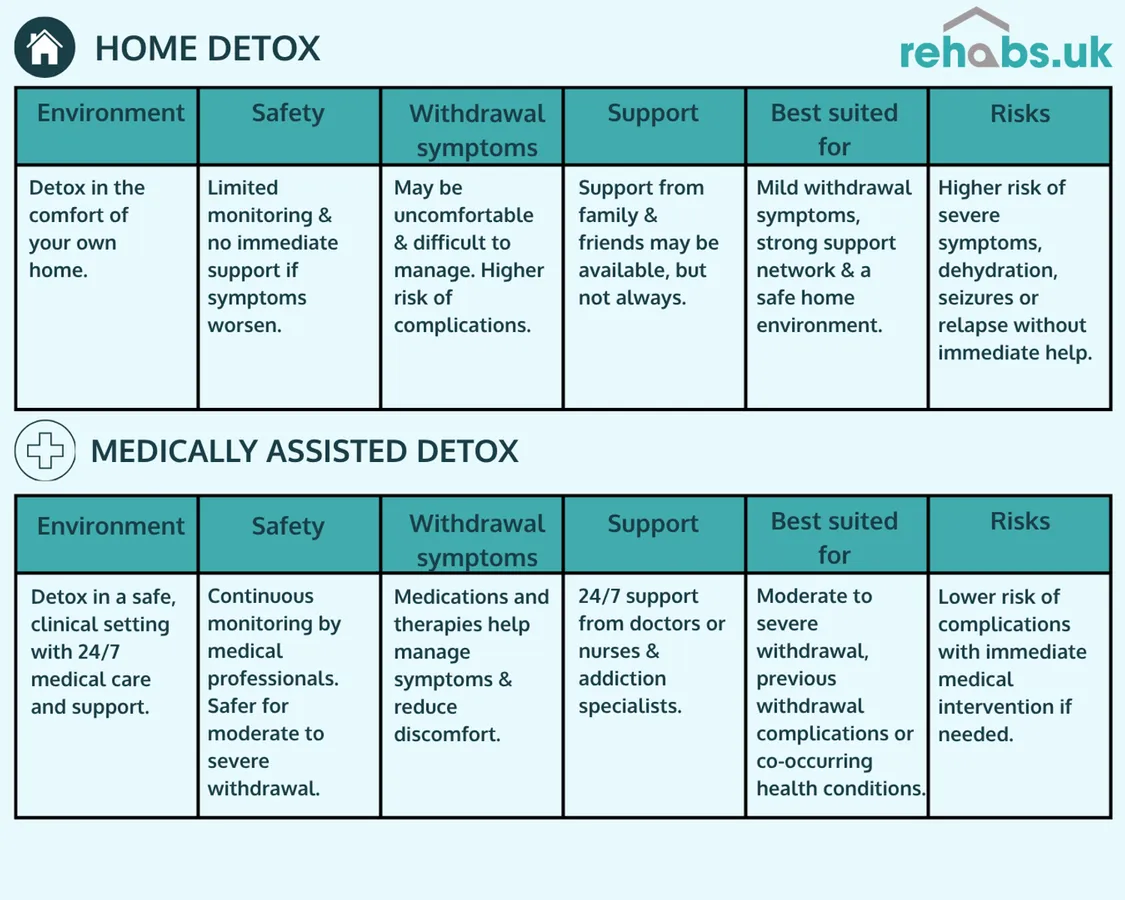
Source: Rehabs UK
Understanding delirium tremens
What is the most common trigger for delirium?
In the context of alcohol withdrawal, delirium is most commonly triggered by suddenly stopping or significantly reducing alcohol after prolonged, heavy drinking. This causes the nervous system, which has adapted to the presence of alcohol, to become overactive. The risk of severe withdrawal and delirium tremens may be higher in people with a history of previous withdrawal episodes or seizures, heavy long-term alcohol use, or other physical health problems.
What does delirium tremens look like?
Delirium tremens symptoms
Common symptoms of DTs include:
- Severe confusion
- Extreme agitation
- Hallucinations
- Tremors and uncontrollable shaking
- Profuse sweating
- Nausea and vomiting
- High blood pressure
- Rapid heart rate
- Seizures
- Disorientation
- Panic and paranoia
Lester Morse describes the symptoms seen in severe withdrawal:
“Hallucinations and confusion, uncontrollable shaking, consistent vomiting or dry heaving and heart palpitations should never be ignored.”
Are alcohol hallucinations and delirium tremens the same thing?
No. Alcohol hallucinations and delirium tremens (DTs) are not the same thing, although hallucinations can occur as part of DTs. Alcohol-related hallucinations may develop during withdrawal while a person remains relatively alert and aware of their surroundings. Delirium tremens is a much more severe and potentially life-threatening form of alcohol withdrawal, involving confusion, disorientation, severe agitation and changes in the nervous system, such as sweating, fever, a rapid heart rate and high blood pressure, alongside possible hallucinations. Anyone showing signs of DTs requires urgent medical assessment and treatment.
Delirium tremens causes
Gamma-aminobutyric acid and glutamate are neurotransmitters that regulate the nervous system. When a person drinks alcohol, this starts to affect the neurotransmitters in the brain.
After long-term heavy drinking, the brain's activity is suppressed. The brain adapts to being able to function with alcohol being present. Once the brain has somewhat regulated itself by removing alcohol, the nervous system becomes overstimulated.
This is called ‘the neurological rebound effect’ which can cause a range of issues including:
- Hyperactivity in the brain
- Elevated blood pressure
- Severe anxiety and agitation
- Hallucinations
- Seizures
- Cardiovascular instability
Lester Morse explains:
“Once the alcohol starts to be removed from a person’s system, the system can become overloaded as it tries to reset itself. The support offered in a medical detox and can be key to success. The individual needs to have around the clock support.”
According to the Cleveland Clinic, untreated DTs historically carried mortality rates as high as 37%, though modern medical treatment has reduced this dramatically.
How long does a medically assisted detox last?
Senior Treatment Advisor Scott Ardley states, “The first 3–5 days are considered the most important to keep an eye on the client.”
How long an assisted detox lasts depends on the individual’s medical history as well as the severity of dependency and how much they are consuming.
As Lester Morse explains:
“The severity of your condition and the quantities involved in your drinking will be the determining factor of the level of medical support needed. This can range from a detox at home to a full hospital admission. Most people on the lower end would be suitable for a home detox, midrange would probably need the support of an inpatient rehab service, and if there is high substance use, mental health issues, or other medical issues then inpatient in a more hospital environment would be the safest choice. Having a full assessment of your circumstances from a company like Rehabs UK would help determine your level of need.”
There are a range of different medications and clinical interventions that may be used during detox.
Common medications include:
- Chlordiazepoxide
- Diazepam
- Lorazepam
- Oxazepam
Monitoring may include:
- Blood pressure checks
- Hydration monitoring
- Seizure risk assessments
- Mental state observations
- Medication adjustments
- Nutritional support
Morse adds:
“The very first part is usually where people feel most anxious, but that's also the part where they get most medication, so when the medication takes effect generally people feel calm pretty quickly. That's why it’s important to get the right medical support once the medication takes over.”
Can delirium tremens be cured?
With medical intervention, such as detox, 95% recover from DTs successfully.
“Early intervention is always a good thing, if you catch the problem early it can reduce the risk of liver damage and make the medical detox process smoother," said Scott Ardley. "We would always advise to seek a medical detox as soon as possible to increase the chance of full recovery with no long-term damage, which is possible if caught quickly. People who do not address the problem correctly and relapse over and over again have higher risks of complications.”
The risk of home detox vs rehab
Senior Treatment Advisor Scott Ardley comments,
“In a real clinic setting, clients are more comfortable as they are monitored and medication used is part of the benzodiazepine family, meaning they reduce the symptoms and risks of seizure. However, clients could still experience mild effects of withdrawal, which include shakes, sweating etc. Blood pressure should be checked regularly to ensure this is in a sensible bracket. If BP is too low or too high, then they should be taken to the hospital. Typically, anything above 160/100 could be dangerous.”
Professional addiction referrals
By getting professional support when withdrawing from alcohol, the probability of long-term recovery is increased. Having specialists around to offer round-the-clock care can dramatically improve the safety of alcohol detox.
Here at Rehabs UK, our highly trained team can help assess a range of different options:
- Whether medically assisted detox is required
- The appropriate level of care
- Whether home detox is safe
- Inpatient rehabilitation suitability
- Ongoing therapy and aftercare options
If you or a loved one is struggling with alcohol addiction or seeking a professional detox, seeking advice is the best option. Don’t hesitate to contact one of our Treatment Advisors who are on hand to answer any questions you may have.
Bibliography
NHS – Alcohol misuse treatment
NICE Guideline CG100: Alcohol-use disorders
Office for Health Improvement and Disparities alcohol statistics
Cleveland Clinic – Delirium Tremens
Related articles
How to spot alcoholism in your loved one?
Understanding the vicious cycle of drinking and depression
Understanding the cycle of alcohol addiction