
29 Jan 2026
Reviewed by Lester Morse, Director of Rehabs UK
Addiction in the workplace is far more common than many managers realise. According to Public Health England, an estimated one in eleven UK employees is affected by alcohol or drug misuse in some form.
A study by Bupa, which included 1,503 employees and 1,500 employers, found that more than half of UK employees (57%) have experienced difficulties with some form of addiction. The most commonly reported issues included alcohol misuse (15%) and recreational drug use (7%),
More information included in the Bupa study is outlined below:
- Just over a third of employees surveyed (34%) say they have either used or witnessed substance use or other addictive behaviours during working hours
- More than seven in ten employers (71%) say they are concerned about addiction-related issues within the workplace.
- Over half of employees (51%) believe stigma prevents individuals from seeking help for addiction at work.
- New research highlights a worrying increase in workplace addiction, with more than one in three employees (34%) acknowledging either personal use or witnessing addictive behaviours during working hours.
For employers and HR professionals, this creates a delicate balance: protecting workplace safety while offering compassionate, evidence-based support.
This guide provides actionable steps for recognising addiction, managing incidents safely, and supporting recovery, while protecting both the organisation and the employee. It complements our employee-focused article, Should I tell my employer I am an addict? offering the employer’s perspective on the same issues.
Table of contents
- How to recognise drug addiction in the workplace
- How to manage an employee using drugs or alcohol at work
- How should drug addiction at the workplace be dealt with?
- Having the conversation: Do’s and Don’ts
- The value of community support in recovery
- Get personalised advice from Rehabs UK
- Related articles
How to recognise drug addiction in the workplace
Early recognition allows employers to intervene before safety or performance decline becomes severe. Addiction rarely appears suddenly, it usually involves subtle changes over time.
Lester Morse, Director of Rehabs UK:
“The signs of employee drug use can be incredibly subtle. Often it’s not the dramatic incidents employers imagine, it's small behavioural shifts, lateness, irritability, or unexplained absences.”
Physical signs
- Bloodshot or glazed eyes
- Shaking, sweating or tremors
- Sudden weight changes
- Unusual smells on breath or clothing
- Slurred or unusually rapid speech
Behavioural signs
- Increased secrecy or defensiveness
- Noticeable mood swings
- Withdrawn behaviour or isolation from colleagues
- Risk-taking or unsafe actions
- Heightened anxiety, irritability or paranoia
Performance signs
- Repeated mistakes
- Missed deadlines
- Frequent sick days or unexplained absences
- Falling productivity
- Poor decision-making or erratic judgement
What are the behaviours of addicts at work?
They typically include inconsistency, poor concentration, avoidance, and changes in demeanour.
If you are wondering what to do if you suspect an employee is on drugs, the next section provides a legally safe and empathetic approach.
How to manage an employee using drugs or alcohol at work
This section addresses immediate safety, including what to do if an employee is drunk at work or under the influence.
Immediate response checklist:
- Prioritise safety. Remove the employee from safety-critical tasks.
- Stay calm and private. Speak to them in a confidential, non-judgemental space.
- Document the incident. Note observations objectively (avoid assumptions).
- Assess risk. If necessary, arrange safe transport home.
- Involve HR. Follow your company's substance misuse policy.
Can you dismiss an employee for being drunk at work?
Potentially, but only after a fair, evidence-based process. The safer and often more effective first step is to treat the situation as a health concern, not misconduct.
Balancing safety with safeguarding
Employers must manage the risk without “punishing” addiction.
How should drug addiction at the workplace be dealt with?
- A fair workplace strategy typically includes:
- A clear drug and alcohol policy in the workplace (UK) context
- Access to occupational health
- A supportive conversation about treatment
- Temporary adjustments to duties if needed
- Referral to specialist services such as Rehabs UK
Employee rights: drug testing in the workplace (UK)
Employers must have clear consent, a written policy, and a justifiable safety rationale before conducting drug testing.
Long-term management
A compassionate, structured approach benefits employers through:
- Improved attendance
- Reduced turnover
- Higher morale
- Reduced risk of workplace accidents
As Lester Morse notes:
“Recovery in the workplace is entirely achievable. Employers who offer support rather than punishment often gain loyal, high-performing staff in the long run. I have employed addicts in recovery myself for many years and believe If they want to do the work to better themselves, they can be successful in any job”
Having the conversation. Do’s and Don’ts
This is one of the most delicate steps in the entire process.
Expert tips for initiating the conversation
- Choose a private, comfortable space.
- Focus on specific behaviours, not assumptions about addiction.
- Avoid moral language (“right”, “wrong”, “bad choices”).
- Actively listen, silence can encourage openness.
- Be clear about workplace expectations and support pathways.
- Encourage accessing help, not hiding the problem.
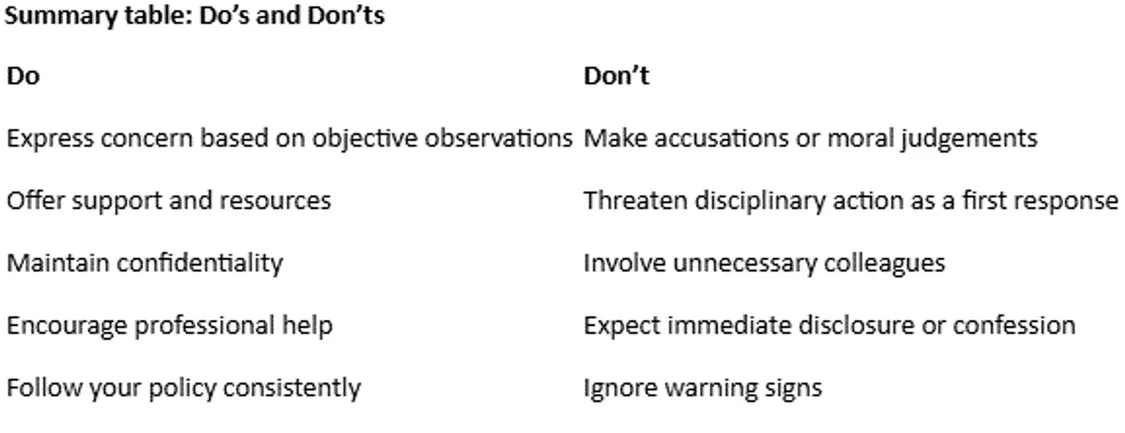
Summary table: Do's and Don'ts when having the conversation
The value of community support in recovery
Addiction is fundamentally a social and psychological condition. Recovery is far more successful when employees are supported through community and peer networks, not just policy.
Organisations such as Alcoholics Anonymous (AA) and Narcotics Anonymous (NA) offer structured, peer-led settings where individuals can openly share their experiences and coping techniques. These groups are widely available and easy to access, and for many people in recovery they form a central source of ongoing support. Consistent participation has been linked to higher levels of long-term abstinence.
Recovery cafés are another valuable form of community support, providing safe, welcoming, and non-judgemental spaces for those recovering from addiction. Often run by trained volunteers or professionals with lived experience, they focus on fostering social connection while offering activities, guidance, and access to recovery resources.
Scott Ardley, Senior Treatment Advisor, comments:
“While professional treatment is very important, peer support can complement it perfectly. Connecting with others who have experienced addiction gives a sense of understanding and belonging that is difficult to replicate in other settings.”
Why community support matters
- Reduces shame and isolation
- Provides role models for long-term recovery
- Offers relapse prevention strategies
- Helps employees rebuild confidence and identity
Employers can facilitate recovery by:
- Offering flexible time for counselling
- Connecting staff with community groups
- Encouraging peer support programmes
- Collaborating with professional services such as Rehabs UK
For more insight into the power of community, you can link to:
- The importance of peer support in addiction recovery
- What is an addiction intervention and how does it work?
- How Does Counselling Help Addiction?
Get personalised advice from Rehabs UK
Supporting an employee through alcohol or drug addiction is an investment, not a liability. Compassionate, structured intervention can transform lives while protecting your organisation.
Rehabs UK can help with:
- Employer guidance and advice
- Structured addiction assessments to establish treatment pathways such as residential rehab or outpatient options
- Tailored treatment planning and aftercare
- Access to medically monitored detox
- Counselling, peer support and relapse prevention
If you need advice on a current situation—or want to strengthen your organisation’s approach, contact our specialist Treatment advisors for expert support today!
Speak to Rehabs UK for confidential guidance.
Related articles
The Silent Epidemic Of Prescription Medication Addiction
Alcohol Addiction Statistics UK
The Rise of Alcoholism in Women