



10 Aug 2026
This article has been reviewed by Senior Treatment Advisor at Rehabs UK, Scott Ardley who has both professional and lived experience supporting people through cocaine addiction recovery.
Many people may believe that cocaine use can only create short-term euphoria and increased energy levels, but this is not the case. Heavy or prolonged use can have big effects on the brain, which then lead to paranoia, delusions, hallucinations, and severe psychological distress.
Cocaine-induced psychosis is more common than many realise. It’s estimated that between 29% and 53% of people who use cocaine heavily may experience psychotic symptoms at some stage, which is more likely during binges and periods of sleep deprivation. According to the Office for National Statistics, cocaine is one of the most commonly used stimulants in the UK, with around 2.7% of adults aged 16-59 reporting use in the past year.
In some cases, the psychological effects can continue for a long time after quitting the drug. Cocaine paranoia, phantom cravings, persistent anxiety and sensations that “something still feels wrong” are all experiences reported during early recovery.
This article will cover what cocaine psychosis is, how long it will last, why you shouldn't face it alone, and how Rehabs UK can help you or a loved one struggling with cocaine use.
Table of contents
- What is cocaine psychosis?
- How long does cocaine psychosis last?
- Why you shouldn’t face cocaine psychosis alone
- How Rehabs UK can help
- Bibliography
What is cocaine psychosis?
Cocaine induced psychosis is a mental health condition that is triggered by cocaine use. It is more common after bingeing, repeated high doses, or prolonged sleep deprivation. It is quite common in those who are dependent. It’s estimated that between 50% and 80% of individuals dependent on cocaine will experience transient psychotic symptoms.
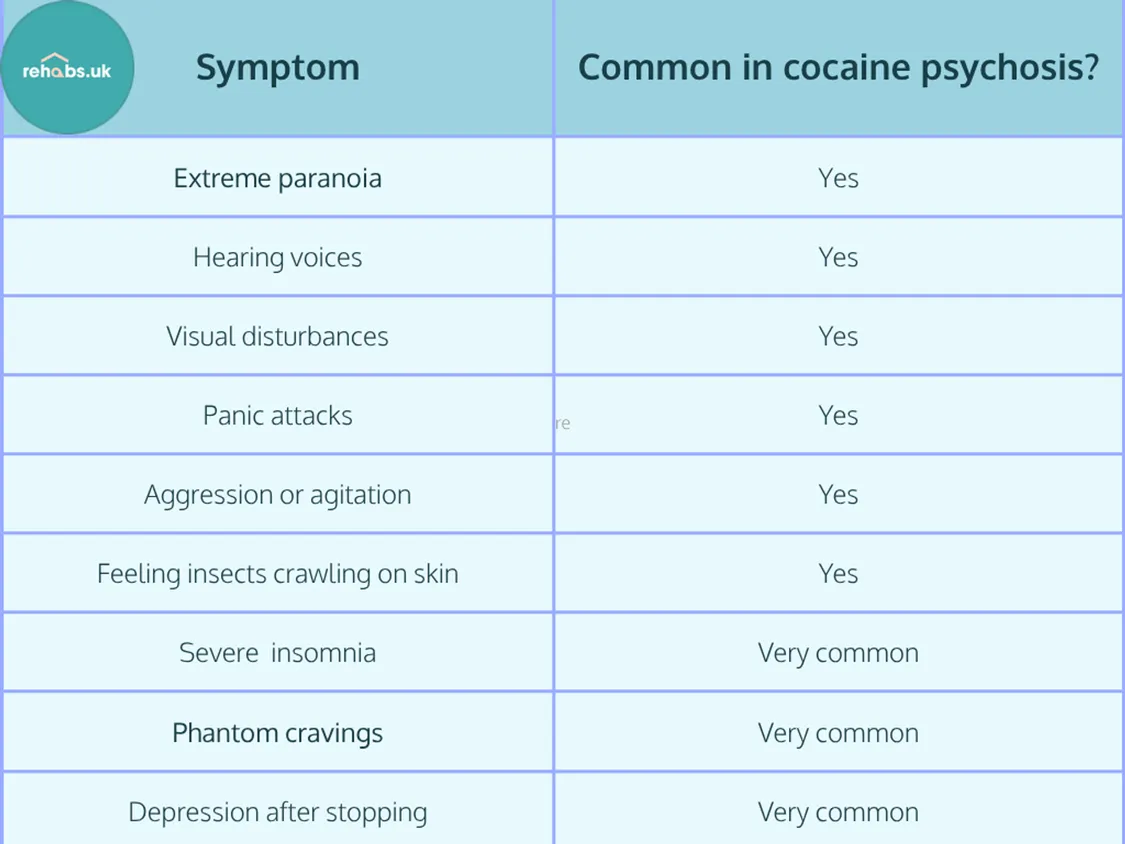
There are a range of symptoms that can occur during cocaine psychosis, such as mild paranoia on the lower end of the spectrum, to severe psychotic episodes.
Common experiences include:
- Intense suspiciousness or distrust
- Cocaine paranoia involving fears of being watched or followed
- Hearing noises or voices that are not there
- Seeing shadows or movement in peripheral vision
- Severe anxiety or panic
- Aggressive or erratic behaviour
- Delusional thinking
- Insomnia lasting days
- Confusion and emotional instability
Why does cocaine cause psychosis?
Cocaine causes large surges of dopamine in the brain. Dopamine is heavily involved in pleasure, perception, motivation and emotional regulation.
Scott Ardley, Senior Treatment Advisor at Rehabs UK explains, “Psychosis can cause hallucinations and paranoia. In some cases, getting into recovery can help, but the worst case is that it affects the client’s mental health for the long term.”
PubMed suggests that paranoia happens in 68% to 84% of cocaine users, especially those engaging in binge use. When someone disrupts how the brain processes reality due to repeated overstimulation, it is often combined with any or all of these challenges:
- Sleep deprivation
- Malnutrition
- Existing mental health conditions
- Trauma or chronic stress
- Polydrug use
- Heavy crack cocaine consumption
source: NIDA - what-are-long-term-effects-cocaine-use?
Hallucinations and phantom cravings explained
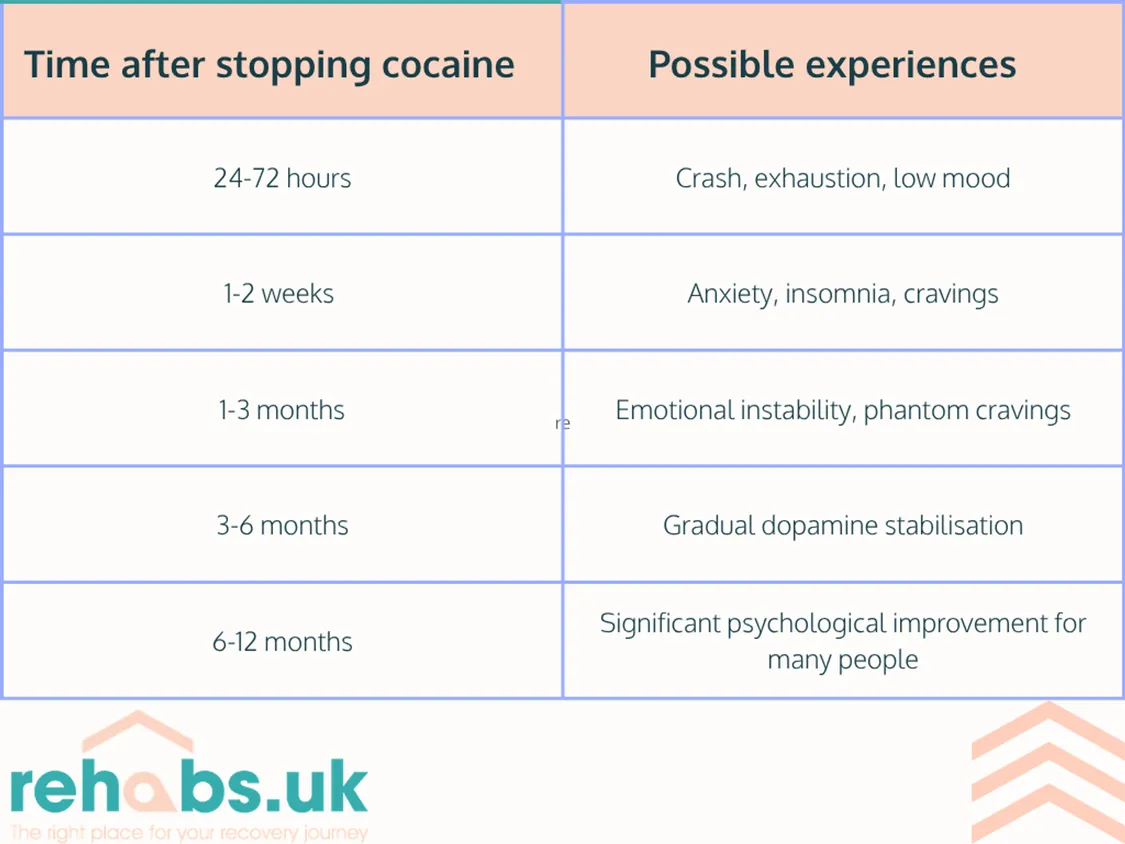
The National Institute on Drug Abuse (NIDA) research shows dopamine transporter recovery can continue for months after stimulant use stops.
Scott Ardley explains:
“The brain struggles to regulate itself at the start, therefore in situations which are hard, the coping mechanisms reach for cocaine relief.”
Why do people feel cocaine “hasn’t left their system”?
Source: NIDA - what-are-long-term-effects-cocaine-use?
“Cravings can come from the mind and can be triggered by chemical smells or even from the petrol station.” Scott Ardley explains. “From the last time you used cocaine, it can take several months to stabilise while the brain adjusts.”
Why do phantom cravings happen?
- Sudden cravings
- Emotional numbness
- Anxiety
- Hypervigilance
- Panic attacks
- Vivid memories associated with cocaine use
- Sleep disturbances
Triggers can include:
- Stress
- Trauma
- Relationship conflict
- Financial pressure
- Sleep deprivation
- Familiar environments
- Smells linked to previous use
Tactile hallucinations
Formication is one of the most disturbing cocaine tactile hallucinations. Formication is the sensation that insects are crawling on your skin. This could be underneath or across the skin. Most people may have seen this portrayed in movies. There are other names for tactile hallucination such as cocaine bug syndrome, phantom limbs or delusional parasitosis.
People may feel:
- Bugs crawling on the skin
- Tingling or prickling sensations
- Movement beneath the skin
- Itching without a physical cause
This symptom can become so intense that some people repeatedly scratch or pick their skin, causing wounds and infections.
Scott Ardley explains:
“Tactile hallucinations like formication come from extreme usage of cocaine, which can cause paranoia that things are crawling on you and they feel real. This can come when coming down from the drug.”
Formication can happen for many reasons. The most common include:
- Dopamine dysregulation
- Extreme overstimulation of the nervous system
- Sleep deprivation
- Severe anxiety and paranoia
- Heavy binge patterns
According to clinical reviews in statPearls, stimulant-induced psychosis involving tactile hallucinations are linked with chronic high-dose use and sleep deprivation.
How long does cocaine psychosis last?
For many people, mild psychotic symptoms improve within several days after stopping cocaine and getting proper sleep. But the answer varies significantly depending on:
- Amount used
- Frequency of use
- Mental health history
- Sleep deprivation
- Polydrug use
- Access to treatment and support
In severe or repeated episodes, cocaine use may trigger longer-lasting psychiatric conditions, particularly in people with a vulnerability to psychosis.
Research published in Frontiers in Psychiatry notes that stimulant-induced psychosis can sometimes persist beyond intoxication and may resemble primary psychotic disorders.
Why you shouldn’t face cocaine psychosis alone
“As cocaine is a mentally addictive drug, the brain needs support to help with the process of coping without it. Scott Ardley explains. “Ongoing therapy or support increases the chance of sobriety and helps prevent relapse.”
Attempting to manage severe cocaine paranoia or psychotic symptoms alone can be dangerous. The risks may include:
- Self-harm
- Suicidal thoughts
- Aggression
- Panic attacks
- Severe insomnia
- Relapse
- Accidental overdose
- Worsening mental health conditions
How Rehabs UK can help
While there is no formal “detox medication” specifically for cocaine itself, many people still require structured support, especially if they are:
- Using multiple substances
- Experiencing severe anxiety
- Living with depression or trauma
- Experiencing psychotic symptoms
- At high risk of relapse
If you or someone you know is struggling with addiction, professional support is strongly recommended.
Do not hesitate to Contact our Treatment Advisors who are on hand to answer any queries you may have.
Bibliography
- National Institute on Drug Abuse (NIDA) – Cocaine Research Report
- PubMed – Cocaine and Psychiatric Symptoms
- StatPearls – Cocaine Toxicity
- Frontiers in Psychiatry – Substance-Induced Psychosis
- Office for National Statistics