


20 May 2026
Sober curiosity is on the rise, with the average number of people in the UK searching for “sober curious” each month in 2025 being more than three times higher than it was in 2020, up 220%. More and more Brits are embracing a sober lifestyle: according to data from NHS Digital, almost a quarter (24%) of adults in England did not drink in 2024, up from just under a fifth (19%) in 2022.
You may expect that a rise in sober people would correspond with a decrease in those dealing with addiction, however sadly, the figures show the opposite. The latest government data reveals that 2023 had the highest rate of alcohol-specific deaths since records began, breaking the record for the fourth year in a row.
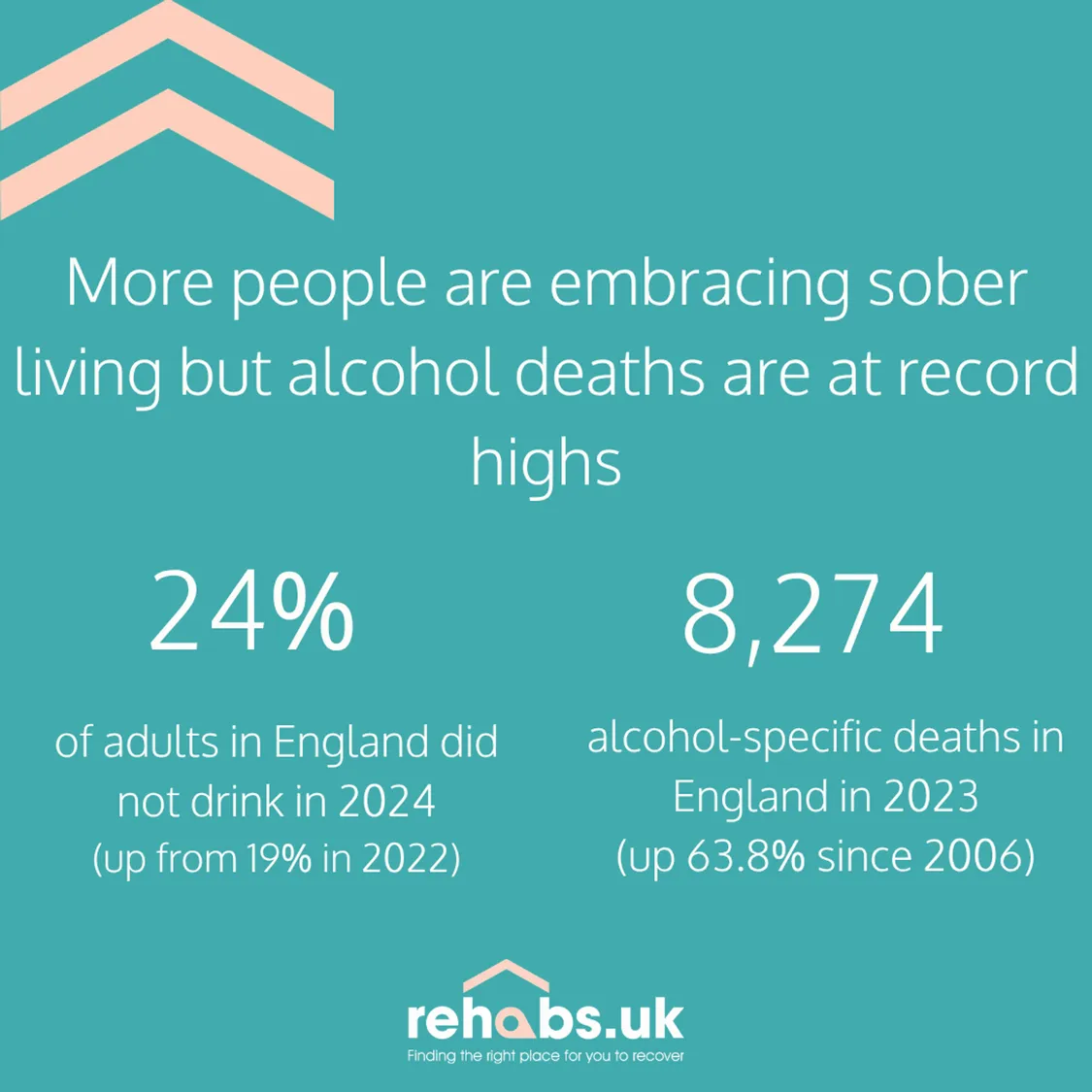
Alcohol Deaths Reach Record Highs Despite Rise in Sobriety
Sources: NHS Digital and OHID Alcohol Profile
Rehabs UK Founder and Director Lester Morse is not surprised by these figures, stating: “Alcoholics, by definition, are not able to stop or moderate their drinking without support, even if they are motivated by health, social, financial, or other reasons. Sober curiosity is a self-help movement, and therefore leaves ‘true addicts’ behind.”
This doesn’t mean that sober curiosity has no place in addiction strategy. Besides making conversations about sobriety more socially acceptable and widespread, there are additional ways the movement can be more inclusive, such as using the sober curiosity movement as a diagnostic tool and signposting appropriate treatment and support, which we'll discuss in more detail throughout this piece.
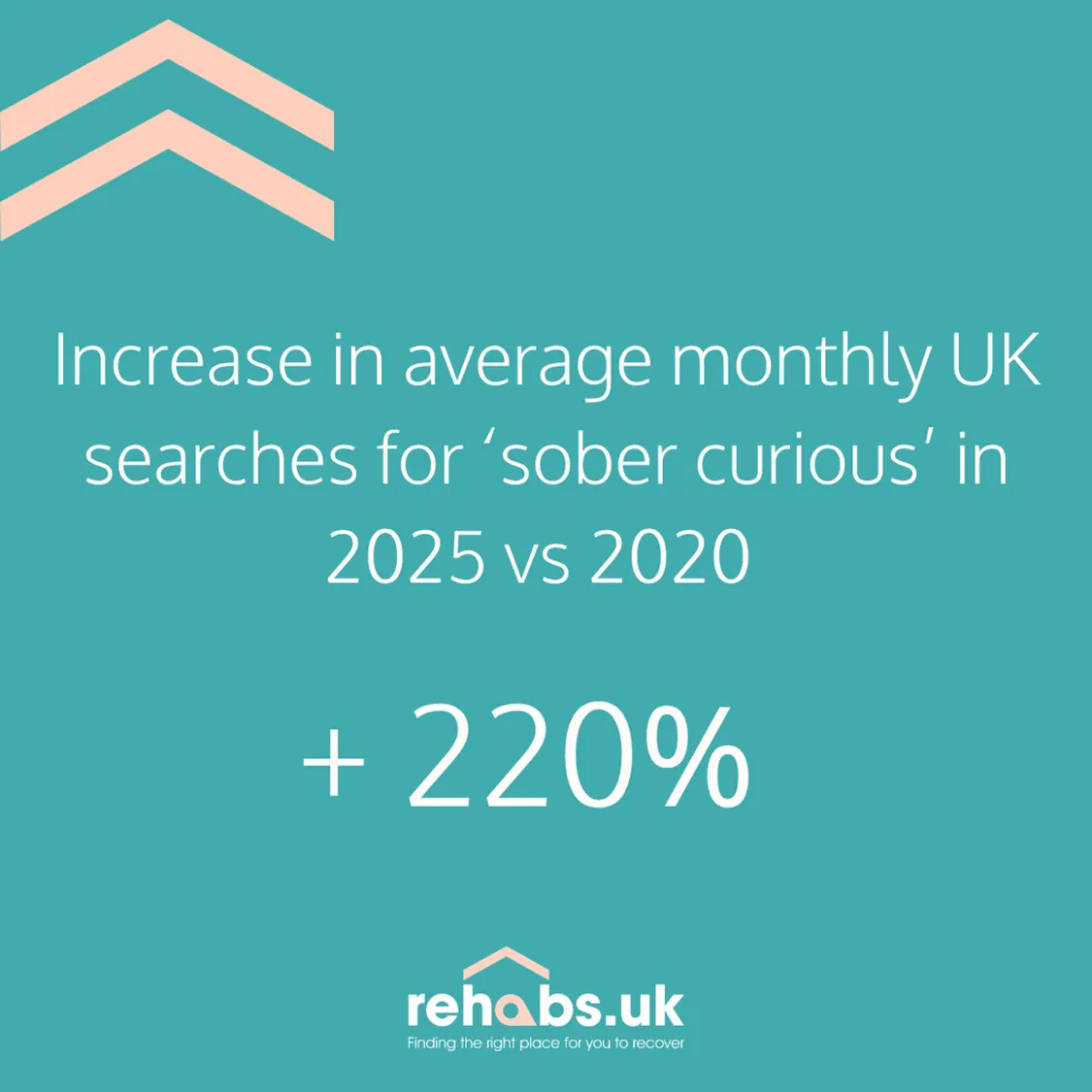
220% Increase in UK Searches for “Sober Curious” Since 2020
Source: Ahrefs
A look at the data: sober curiosity vs a rising death toll
The number of adults in England who say they do not drink alcohol at all has increased in recent years, with the latest figures from 2024 showing that an estimated 11.2 million adults had not drunk alcohol in the last 12 months. An additional 25.9 million adults drank at recommended (lower risk) levels.
According to the same data from NHS Digital, women were more likely to say they did not drink, or drink at lower-risk levels than men were:
- 22% of men and 26% of women did not drink alcohol in the last 12 months.
- 51% of men and 60% of women drank at levels that put them at lower risk of alcohol-related harm.
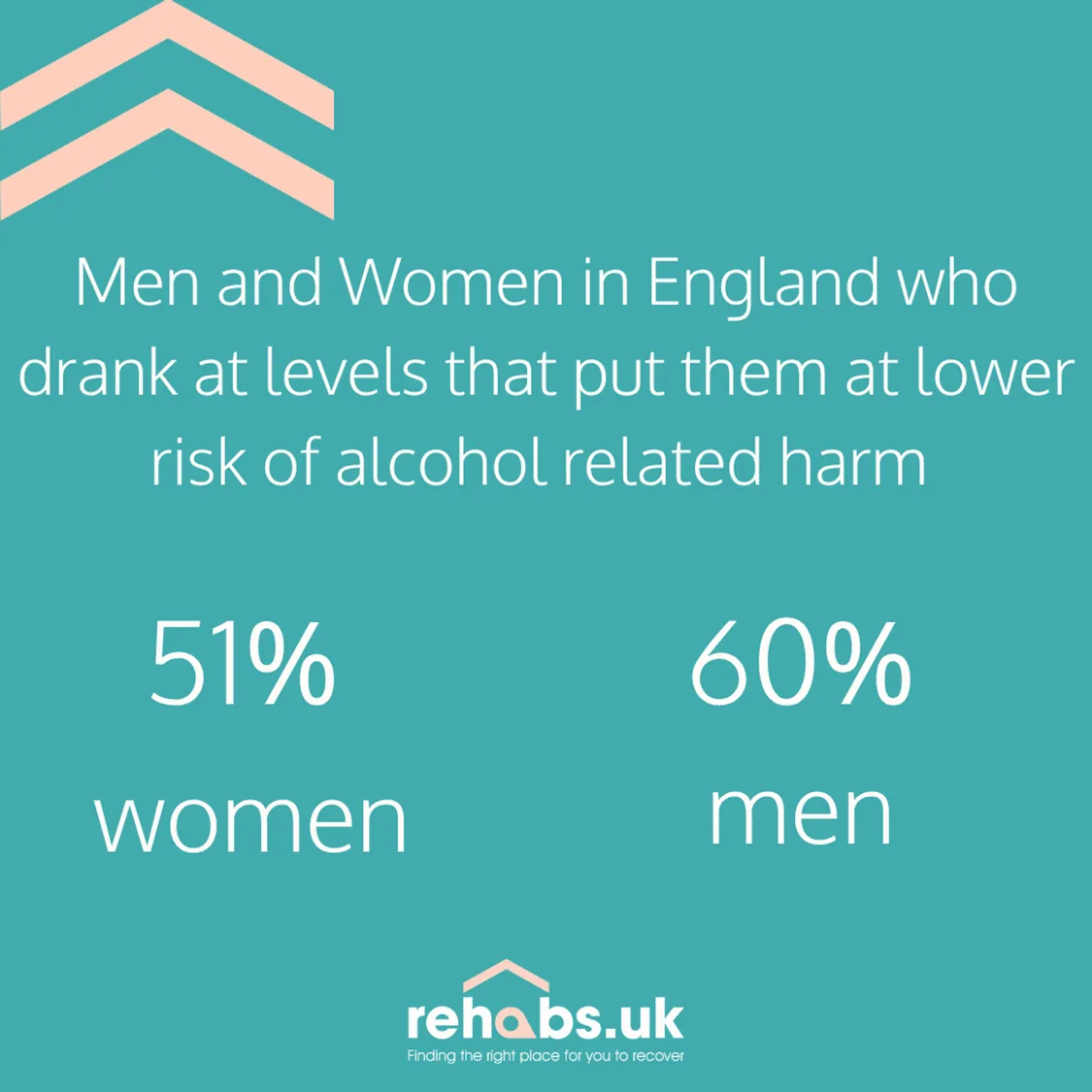
Lower-Risk Drinking Levels Among Men and Women in England
Source: NHS Digital
The sober lifestyle is becoming increasingly mainstream, with non-alcoholic drinks growing in popularity, and sober events like Dry January and Sober October reporting more participants each year. While the British drinking culture is still very prominent, the normalisation of a sober curious lifestyle and open conversations surrounding it is important in reducing stigma and sober-shaming.
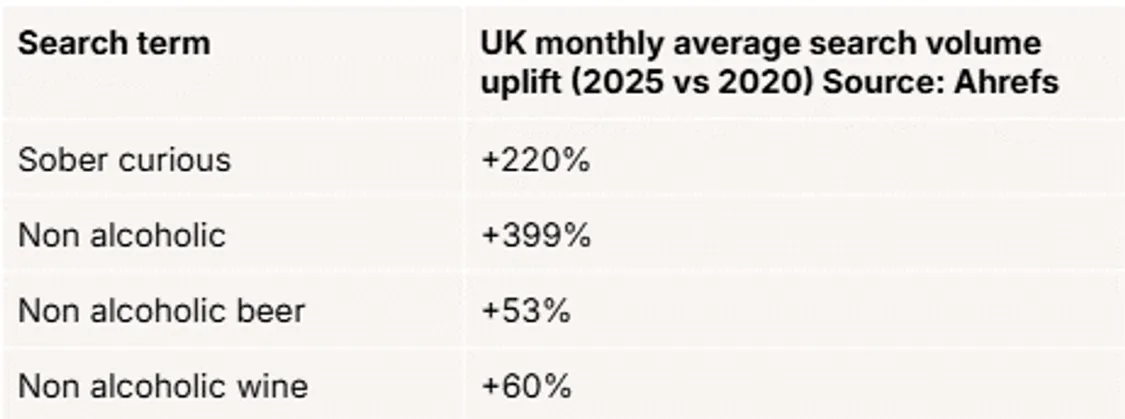
UK monthly average search volume uplift (2025 vs 2020) Source: Ahrefs
Unfortunately, and perhaps surprisingly to some, this increase in sober curiosity has not correlated with reduced alcohol-related harm. In fact, alcohol-specific deaths have been rising for years, with a record-breaking 8,274 alcohol-specific deaths in England in 2023 - a 4.6% increase from 2022 and a 63.8% rise since 2006.
The idea that the younger generation is drinking less has also been disputed, with recent reports suggesting that Gen Z adults actually drink more than millennials did at the same age.
Why the sober curious movement leaves alcoholics behind
As the data above shows, while there may be more sober people, the number of people struggling with alcohol-related harm has increased. Lester notes that generally, people who are likely to benefit from the sober curiosity movement are not those with deep-rooted addiction issues.
Lester suggests that people who want to reduce their drinking, or those engage in occasional risky behaviour but are not addicted to alcohol, may benefit from the sober curiosity movement. It can help them re-evaluate the role that alcohol plays in their life, and support them to moderate their drinking habits. However, once someone becomes dependent on alcohol, or develops what Lester describes as a ‘mental obsession’, changing this becomes very difficult without professional help.
He states: “I believe that addiction is fundamentally misunderstood. Alcoholism is often described as a spectrum, from mild to moderate or severe, with no clear diagnostic criteria that separate an unhealthy dependency from an alcoholic. As a result, treatment is often lumped together, and alcoholics are frequently offered tactics to manage symptoms, which I believe does not address the issue sufficiently.”
Rehabs UK has previously raised concerns that short-term sobriety months can give a false sense of security to people on the edge of dependence, or leave those who cannot complete them feeling even more ashamed and isolated.
The social divide: deprivation and dependency
Another reason why the rise of the sober curiosity movement is not decreasing alcohol-related harm is because of social divides.
Data from Public Health England shows that rates of alcohol-specific mortality increase as the level of deprivation increases. Alcohol-related liver disease also strongly correlates with socioeconomic background. Similar trends are seen in drug-related harms, with drug use disorders more prevalent among people experiencing socioeconomic disadvantage and higher drug-related death rates in the most deprived communities.
The report also highlights the “alcohol harm paradox”: disadvantaged populations who drink the same, or lower, levels of alcohol experience greater alcohol-related harm than more affluent populations. This means that even if people in disadvantaged populations successfully decrease their alcohol consumption as a result of the sober curiosity movement, they are still facing higher risks of alcohol-related harm.
In addition, research shows that accessibility to the sober lifestyle is mainly affordable for people with more means.
How to make the sober curiosity movement more inclusive
Lester says: “The Sober Curious movement can act as an incredible diagnostic tool for people who are alcoholic.”
“When drink diaries first came out in the 90’s, all us abstinence-based recovery believers were in uproar,” he remembers. “We were convinced that they wouldn’t work, because alcoholics can’t control their drinking. However, this proved to be exactly what made the exercise work.”
Lester notes that one of the most difficult steps in recovery is to help an alcoholic understand that they cannot drink like other people. He states: “The persistence of the illusion that they can one day control and enjoy their drinking is so astonishing that many pursue it into the gates of insanity or death.”
Lester continues: “Unfortunately, at the moment, much of our society’s attention and investment is focused on harm reduction, and underfunds recovery. In my eyes, this policy is complicit in maintaining this illusion.”
Sober curious initiatives and harm reduction policy alone cannot turn the tide on addiction harm. However, using these tools alongside, and as a lead into recovery treatment, can make a positive impact.
Much like drink diaries, failing to maintain a sober curious lifestyle can act as a diagnostic criterion to distinguish dependency from alcoholism and lead to better-matched treatment as a result.
With this should come an increased focus and investment in recovery treatment and peer-to-peer support initiatives, for which there is a growing body of evidence on their effectiveness in reducing addiction-related harm.
In summary, the sober curiosity movement, including sober months, can become more inclusive by:
- Increasing awareness of the difference between an unhealthy relationship with alcohol and ‘true addiction’.
- Using sober curiosity movement as a diagnostic tool, and signpost appropriate treatment and support.
- Increasing both awareness and accessibility of recovery treatment services and peer-to-peer support for those who need it.
- More research into sober lifestyle accessibility for deprived populations, including how this can be improved.
Here to help
We encourage anyone struggling with addiction or dependency to reach out for a confidential consultation. Rehabs UK is committed to continuing to support those battling alcoholism, drug addictions and behavioural addictions.