
13 Jan 2026
Last updated: 13 January 2026
At least 299,000 people aged 16–59 in England and Wales reported illicit ketamine use in 2024 — the highest number on record.
This page compiles the latest available data (2024 + 2025) on ketamine use, related harms, trends, and treatment uptake in the UK. All figures are drawn from government publications, academic research and peer-reviewed data sets, including the latest from 2025.
Table of contents
- Ketamine use in the UK
- Popularity and growth in use
- Ketamine and health
- Ketamine addiction treatment
- Find support for ketamine addiction
- Bibliography
- Related articles
Ketamine use in the UK
Total ketamine consumption
In 2024, an estimated 299,000 people aged 16–59 in England and Wales reported using illicit ketamine.
This figure represents the highest recorded level of ketamine use in recent years, reflecting a *rising trend beyond its traditional “club drug” reputation.
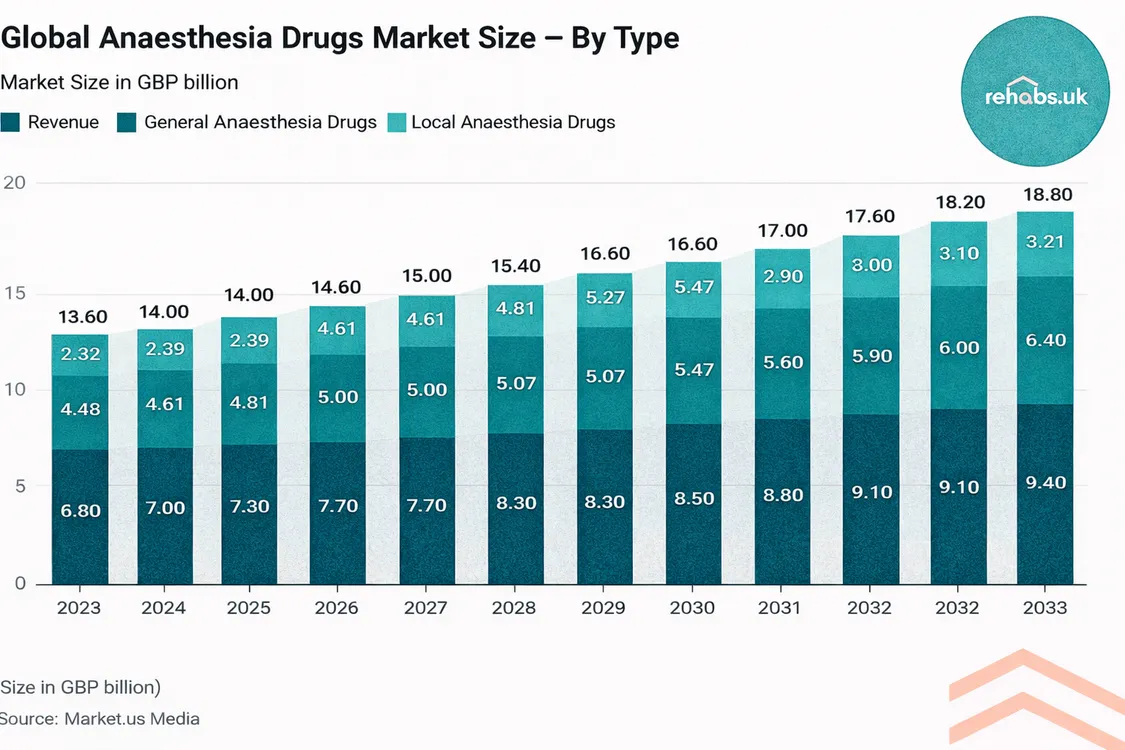
Global Anaesthesia Drugs Market Size
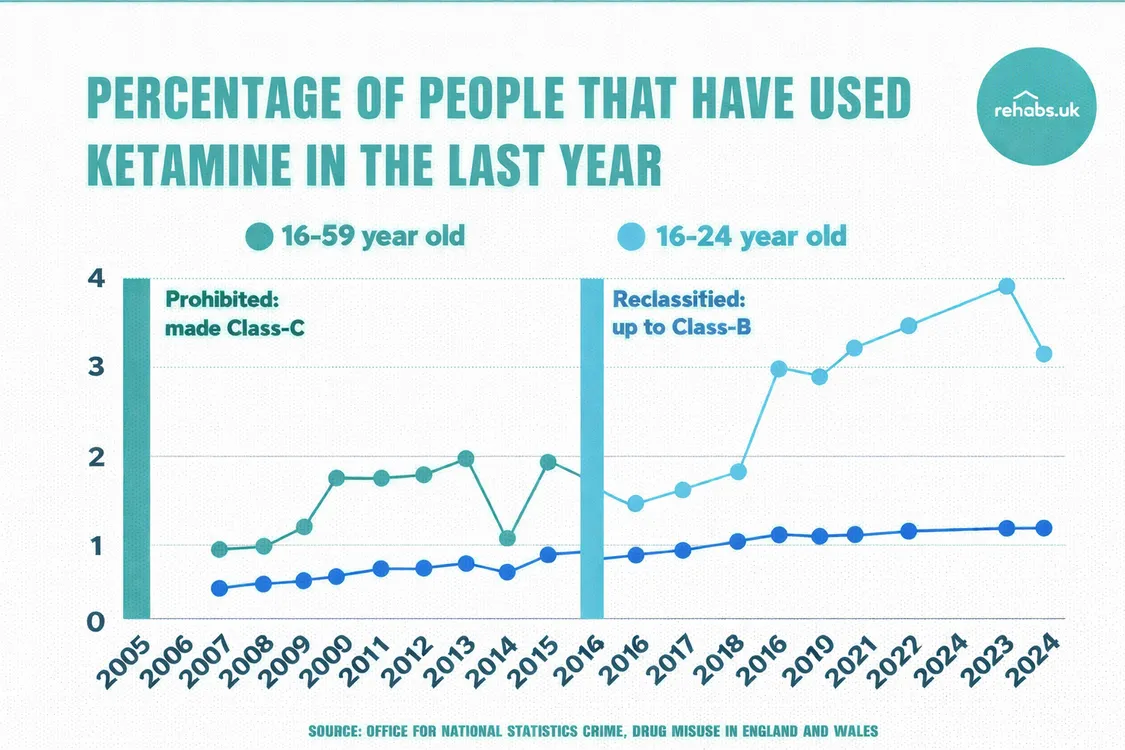
Percentage of people that have used ketamine in the last year
Use by region
Recent data does not yet permit a fully reliable region-by-region breakdown of ketamine prevalence. However, researchers who did a report on Deaths following illicit ketamine use in England, Wales and Northern Ireland 1999–2024: note rising use across urban and rural areas alike, especially where affordability and availability are high.
Gender breakdown
While most national surveys report total users, public health researchers involved in the 2025 ketamine-death data release note a growing proportion of female users and fatalities, a shift from earlier years when male users dominated.
Popularity and growth in use
Use by age group
- Among people aged 16-59 299,000 reported ketamine use in 2024.
- Anecdotal reports and surveys suggest a noticeable increase among younger adults (16–24 years), though robust national data for 2024 across all age brackets
- The Guardian reports that ketamine’s growing appeal as a “house / chill-out” drug rather than purely a party substance.
Use with other drugs
- Fatality data shows that most recent ketamine-related deaths involve polydrug use — i.e., mixing ketamine with other substances rather than ketamine alone.
- Experts from the University of Hertfordshire warn that this increases the unpredictability of risk and complicates harm reduction and treatment.
Availability and affordability
- One of the factors driving ketamine’s popularity is cost: researchers cite ketamine’s lower street price (often £15–30 per gram) compared with many other illicit stimulants.
- Cheap price, ease of access, and growing social acceptability outside traditional “club” settings appear to make it more attractive among a broader demographic.
Ketamine and health
Health impact statistics
Ketamine-related deaths
- A 2025 analysis of coroner reports (1999–2024) found 696 total deaths with detections of illicit ketamine across England, Wales, and Northern Ireland — the most comprehensive review to date.
- This represents a twenty-fold increase in ketamine-related deaths since 2014.
- The most recent data indicates approximately one ketamine-related death per week across the UK for 2023–2024.
- Bladder and kidney issues clinicians increasingly report chronic bladder and urinary tract complications among frequent users — from painful inflammation and frequent urination to severe long-term damage requiring surgery.
- Although precise national-level figures are scarce, the rise in bladder-related hospital admissions linked to ketamine supports a growing health burden.
Ketamine addiction treatment
According to the latest national data (2024–2025), ketamine problems accounted for 3.2% of all new entrants to adult substance misuse treatment services — up from 2.3% in 2023–2024.
The number of people entering ketamine treatment has surged: 5,365 individuals in 2024–2025, compared with only 426 in 2014–2015 — more than a 12-fold increase over a decade.
These increases suggest a gradually rising recognition of ketamine dependence and an expanding need for specialised treatment and rehab services.
Find support for ketamine addiction
If you or someone you know is struggling with ketamine use or dependence, don’t hesitate to contact our fully trained Treatment advisors. Early intervention can reduce harm — including the risk of serious health complications, chronic bladder damage, or overdose.
At Rehabs UK, our services include:
- Confidential assessment of ketamine use and dependency
- Medically supervised detox and withdrawal support
- Long-term counselling and relapse prevention
- Tailored rehab programmes including psychological and social support
- Aftercare planning and community support link-ups
Contact Rehabs UK for confidential support and guidance
Bibliography
- King’s College London / University of Hertfordshire / Manchester Metropolitan University. Analysis of coroner reports on ketamine-related deaths in England, Wales and Northern Ireland (1999–2024). 2025.
- GOV.UK. Adult substance misuse treatment statistics 2024–2025. 2025.
- Office for National Statistics. Deaths related to drug poisoning in England and Wales – 2024 registrations. 2025.
- The Guardian. “Ketamine’s move from club to ‘chill-out’ drug is a troubling culture shift.” January 2025.
- ITV News. “Ketamine-related deaths up 650% since 2015 as experts warn of next drug pandemic.” April 2025.
Related articles