



05 Nov 2026
Yes, it is possible to stop using cocaine without residential rehab, but success depends on the combination of dependence levels, physical health and the amount of peer support available.
For individuals with mild-to-moderate dependency, community-based care offers a viable path via counselling, peer groups and ongoing support from loved ones. However, due to cocaine's powerful impact on the brain’s reward system, at-home recovery is not suitable for everyone.
Cocaine addiction also frequently co-occurs with mental health conditions such as anxiety, depression, or anhedonia. In these cases, structured clinical intervention is often essential for safety and long-term success.
With the right tailored support, long-term recovery is possible, whether that is outpatient treatment, home detox, residential treatment, or more community support. It is only through understanding the individual’s needs that it can be determined if rehab is the best treatment option for them.
Table of Contents
- Who can community-based recovery work for?
- Why quitting cocaine successfully requires support
- How to stop using cocaine safely
- At-home strategies
- When to consider professional help
- Bibliography
- Related articles
Who can community-based recovery work for?
Community-based recovery is most suitable for those who may be using cocaine but still functioning in society. For example, still going to work, attending responsibilities, living at home and caring for their loved ones.
In this situation, using a combination of free drug services (such as Narcotics Anonymous or Cocaine Anonymous, recovery groups, counselling and support from loved ones can encourage successful long-term sobriety.
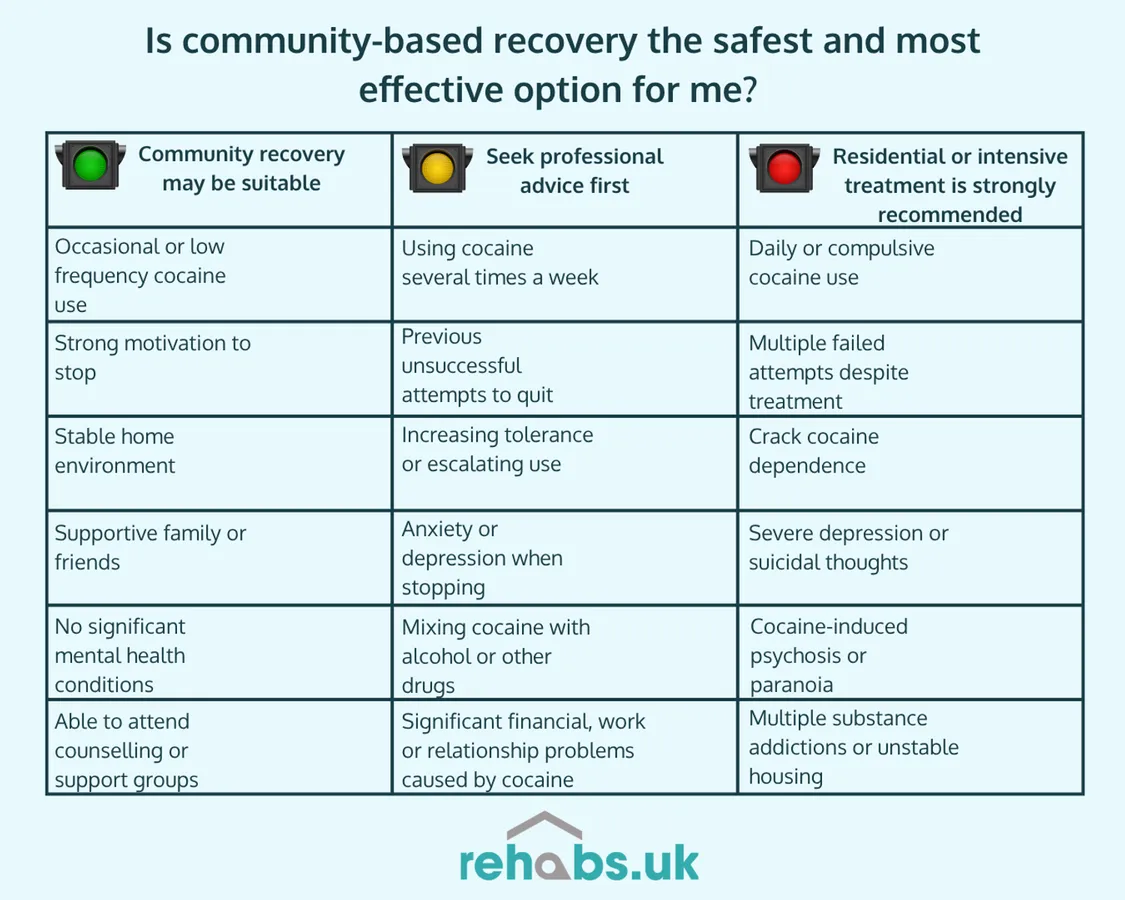
Recovery is not a one-size-fits-all journey. Factors such as frequency of use, underlying physical health, and co-occurring substance habits determine whether staying at home is clinically safe.
Is community-based recovery the safest and most effective option for me?
Use the traffic-light self-assessment below to evaluate whether community recovery or residential treatment aligns with your circumstances:
Source: Rehabs UK
If you frequently consume cocaine alongside alcohol, self-detox carries heightened physical risk. Anyone using more than one drug regularly should undergo an assessment before halting use of either.
Why quitting cocaine successfully requires support
A persistent myth about addiction is that stopping is just down to willpower. While determination and motivation are key factors in successful recovery, chronic cocaine consumption alters how the brain functions, and this makes ‘simply’ stopping much more complicated.
Unlike alcohol or benzodiazepine dependence, cocaine doesn’t cause severe physical withdrawal. Instead, the issue with stopping cocaine use is the psychological effects.
When the unnatural dopamine surges from use stop suddenly, the brain experiences an extreme deficit, causing acute dysphoria. There is often a stage where individuals experience extreme emotional highs and lows as a result, making a good support network key to recovery outside of a rehab system.
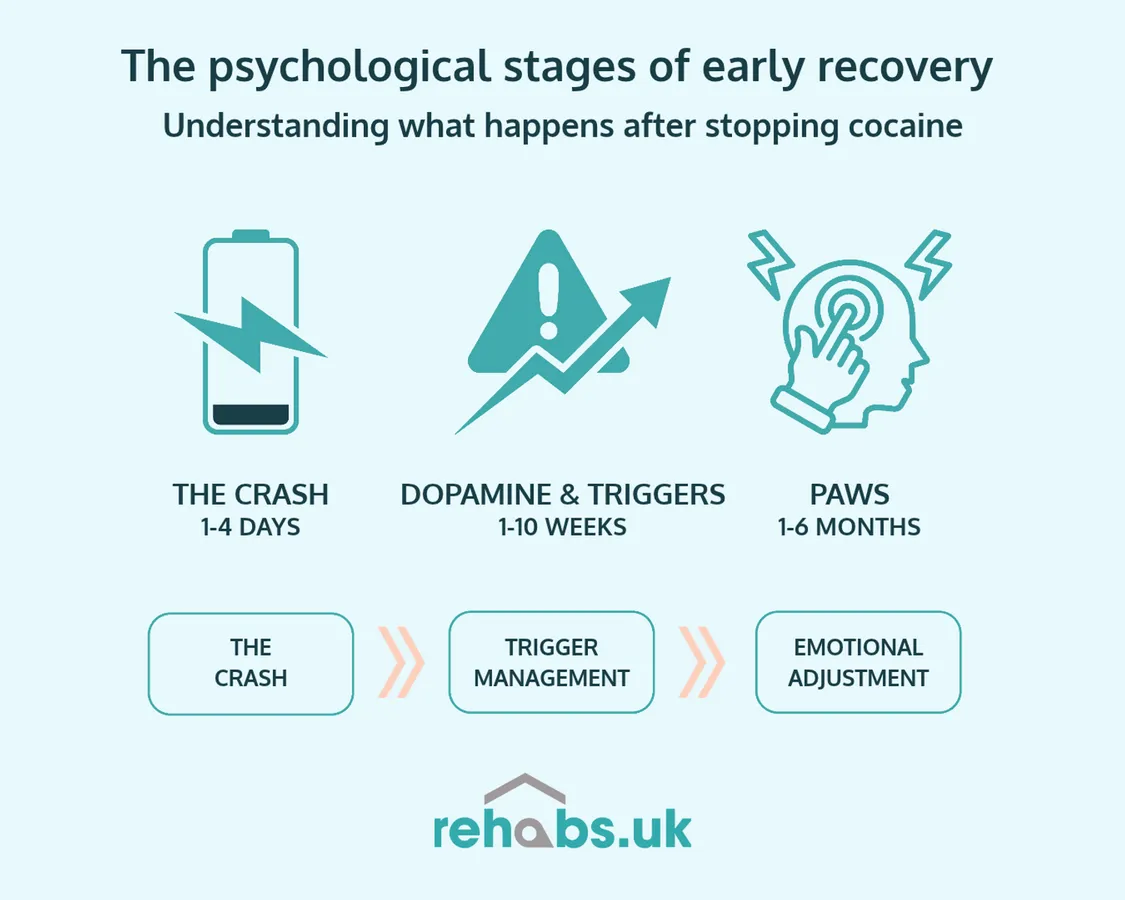
The psychological stages of early recovery
Understanding the process your body is, or is about to go through can help to clarify which method of recovery is right for you.
Source: Rehabs UK
- The cocaine crash (Days 1-4)
When cocaine use stops, the brain temporarily loses its ability to regulate mood, resulting in:
- Low mood
- Irritability
- Overwhelming fatigue
- Sleeping for long periods
- Difficulty concentrating
Without accountability, the impulse to self-medicate this crash with more cocaine is high.
- Dopamine surges (Weeks 1-10)
As the brain stabilises, environmental factors also need to be managed. Brain imaging studies show that drug-related cues can activate the brain's reward pathways long after cocaine use has stopped.
These activities and experiences could include:
- Payday
- Drinking alcohol
- Visiting certain pubs or clubs
- Receiving messages from friends who still use cocaine.
By recognising the triggers builds the skills needed for long-term recovery and how to cope or avoid these situations.
- Post-Acute Withdrawal Syndrome (Months 1-6)
Emotional symptoms of withdrawing from cocaine can be experienced for many months after use ends. This is what is known as post-acute withdrawal syndrome (PAWS) and may include:
- Reduced motivation
- Mood swings
- Anxiety
- Poor concentration
- Sleep disturbances
- Difficulty experiencing pleasure.
See our dedicated guides on cocaine withdrawal and anhedonia during recovery for more detailed insights.
How to stop using cocaine safely
There can be many triggers or emotional effects when starting your recovery from cocaine. If you are not in residential rehab, it is important to create a structure to make the process safer, easier, and improve your chance of success.
Seek medical advice from a healthcare professional
Schedule a consultation with your GP or a qualified addiction specialist as a first step. They will evaluate cardiovascular risk, assess co-occurring mental health issues, and connect you with local NHS community drug services or outpatient teams.
Tell someone you trust
Having just one person know about your addiction can increase the chance of long-term recovery. It can be a lot for someone to deal with on their own. Sharing also means that there’s some accountability, encouragement and help if things get difficult.
This could be a partner, family member, friend, counsellor or recovery sponsor.
Remove cocaine from your environment
Reduce immediate access by systematically removing triggers. It can feel isolating at the start, but it's important to have gradual exposure to triggers to ease the brain and give it time to recover before being involved in high-risk situations.:
- Delete drug dealers’ numbers
- Step away from social media accounts that encourage drug use
- Dispose of all cocaine-related paraphernalia
- Hand financial control to a partner or establish daily withdrawal limits.
Break high-risk routines
It’s common to pair cocaine use with a particular routine. This could be finishing work, payday, socialising or feeling stressed or bored. One of the best ways to help recovery is by disrupting those routines and replacing them with healthier ones.
Emergency planning
Cravings are extremely normal when detoxing from drugs as well as in continued recovery. This isn’t a negative, but it requires the individual to be prepared in these moments.
Prepare a written action card kept in your wallet or phone containing:
- Three people you can call when cravings strike
- Activities that distract you for 30 minutes
- A list of reasons you want to stop
- Calming techniques that work for you
- Emergency support numbers (Frank: 0300 123 6600, NHS 111, Samaritans: 116 123).
‘At-home’ strategies
Outlined below are some of the evidence-based strategies that can help an individual keep to their recovery.
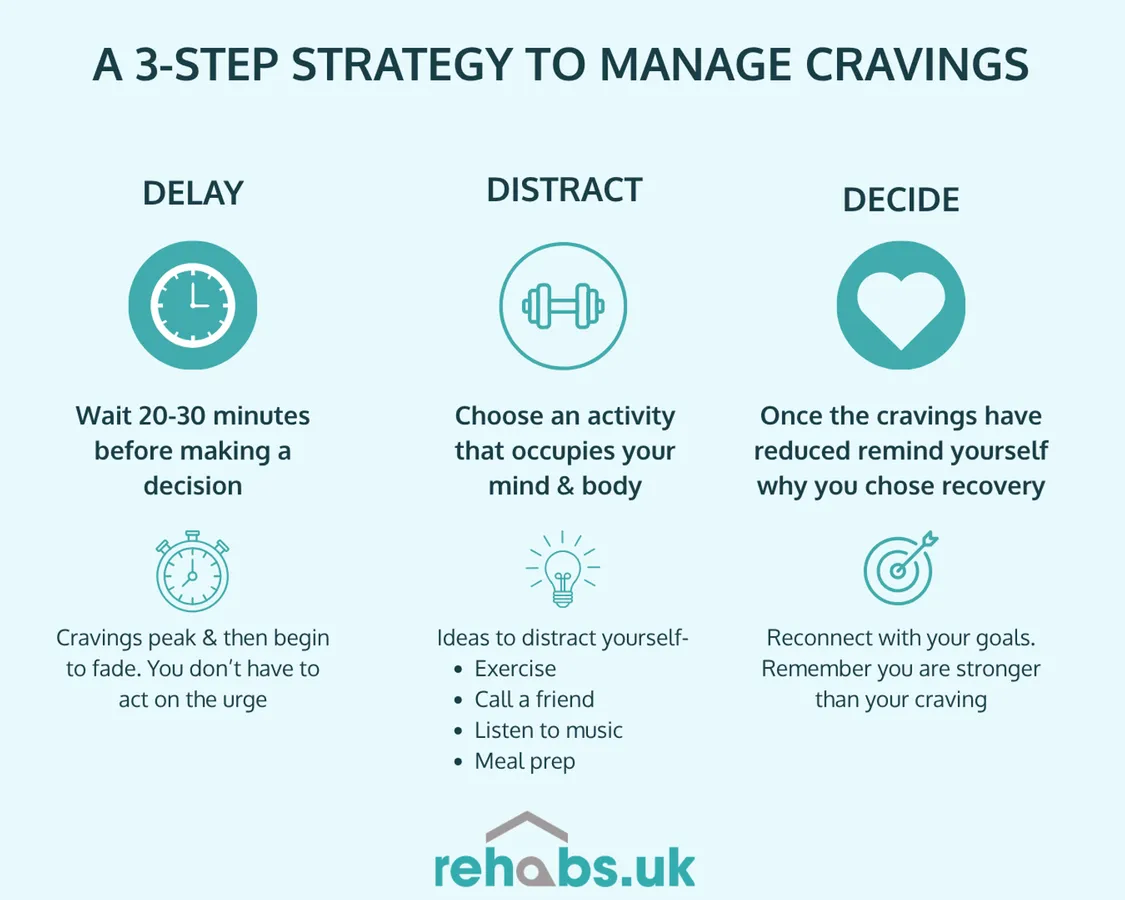
Learn the ‘Delay, Distract, Decide’
Cravings function in waves. They rise in intensity, peak, and dissipate. Use this technique to manage and resist the urge.
Source: Rehabs UK
- Delay: Wait 20-30 minutes before coming to a decision
- Distract: Pick an activity that can use both body and mind. For example, walking, calling someone or cooking.
- Decide: When the craving has reduced, think about the journey you’ve been on with recovery. Remind yourself why you started and then often the urge to relapse reduces.
Healthier ways to manage emotions
Cocaine is used by many to deal with difficult emotions. If there is no healthy coping mechanism in place, these feelings often return in recovery. Below is a simple table that outlines when you feel a certain emotion and what you can try to ease it rather than cocaine.
- Stressed? Try breathing exercises.
- Lonely? Call a friend or attend a support meeting
- Bored? Start a new hobby
- Angry? Take a mindful walk
- Anxious? Talking therapy
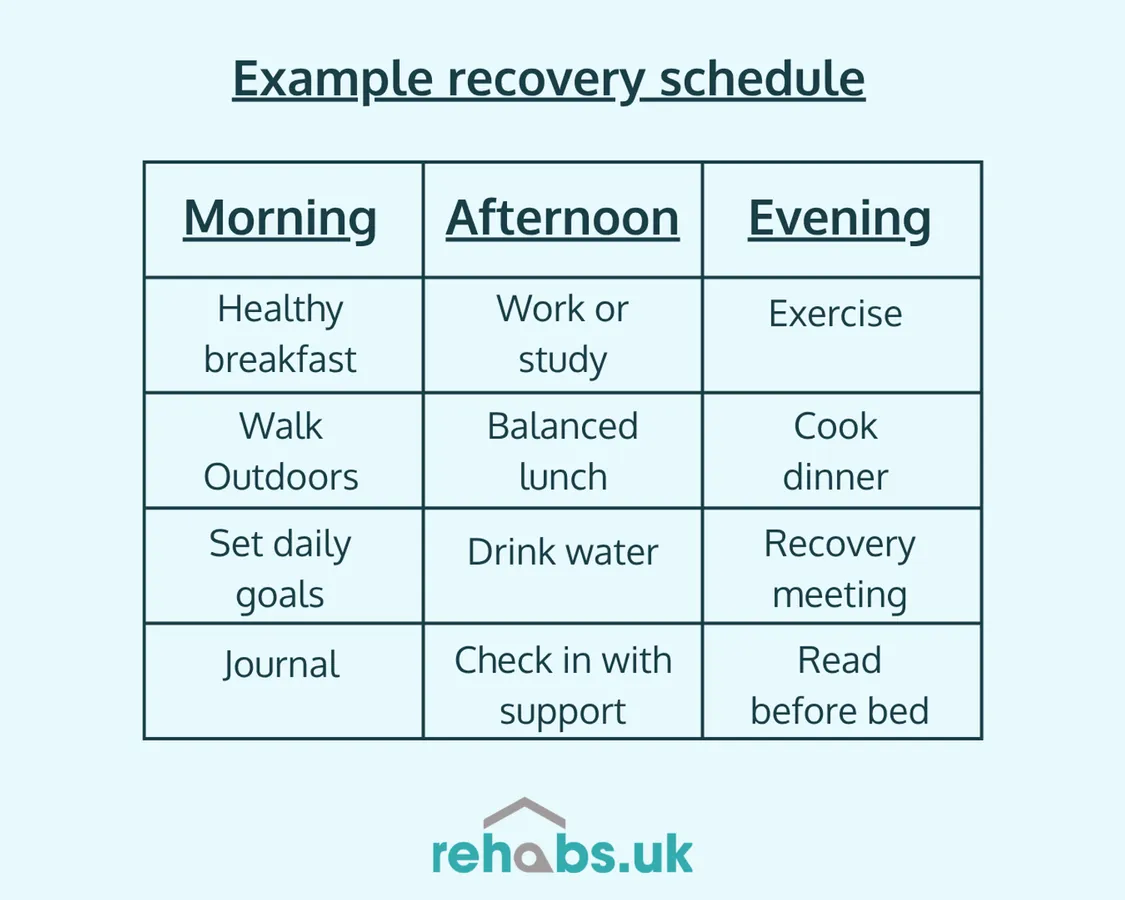
Build a predictable daily schedule
Source: Rehabs UK
Boredom and lack of structure represent significant relapse triggers. Having predictable routines and healthier habits reduce idle time and impulsive temptations.
- Start each day with a healthy breakfast, an outdoor walk and journaling.
- Work or study in the afternoon, followed by a balanced lunch.
- Evenings should begin with exercise, dinner and reading before bed.
Creating a recovery journal
Writing down thoughts and feelings can help to identify patterns and triggers going forward, which may not have been as easily visible without a physical record. To begin, try recording:
- Today's mood
- Cravings (1–10)
- Triggers experienced
- Coping strategies
- One thing you're grateful for
- Tomorrow's goal.
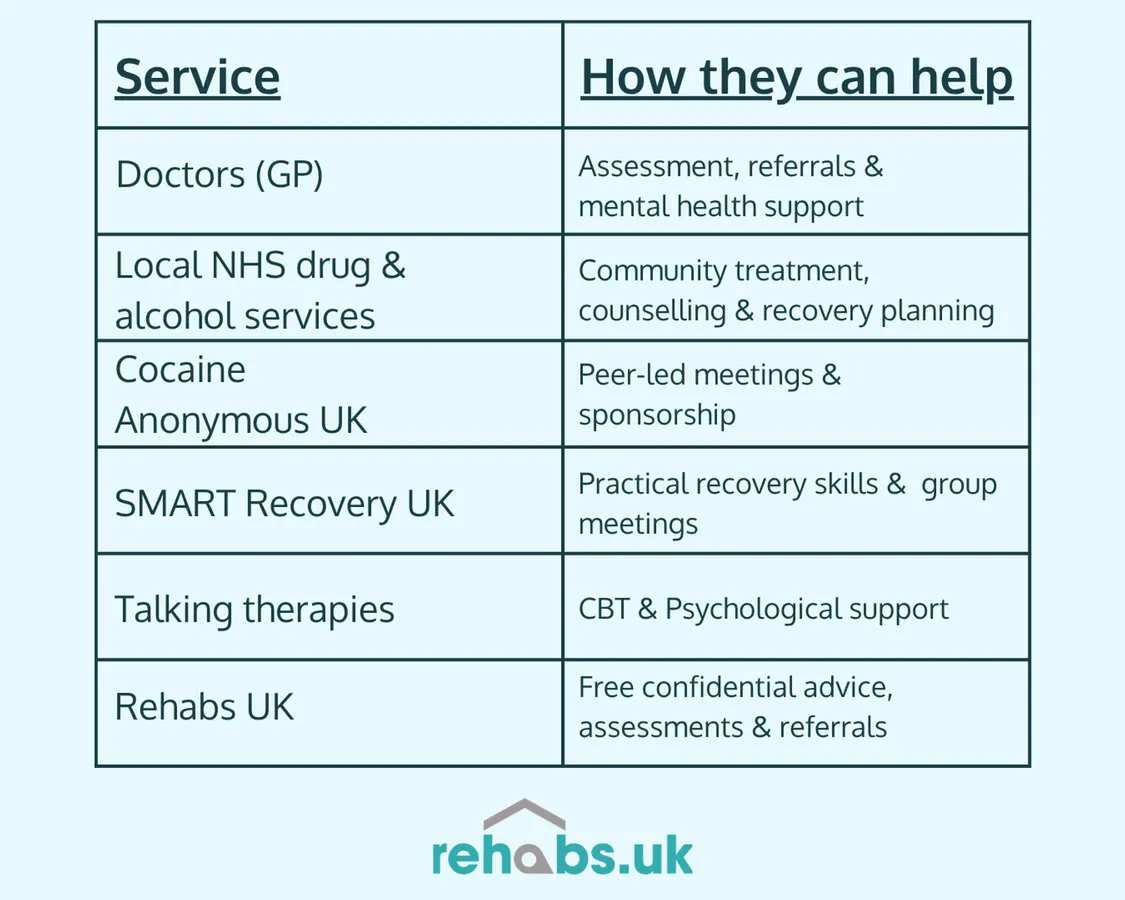
Create a recovery network
Source: Rehabs UK
Having a support network can only improve recovery. It doesn’t have to happen on your own. There are many free and low-cost services outlined below:
"People worry they'll be judged or that admitting they need help means they've failed. In reality, asking for help is one of the strongest decisions someone can make. Most people tell me afterwards they wish they'd reached out months or even years earlier." - Scott Ardley, Senior Treatment Advisor at Rehabs UK
When to consider professional help
The common misconception that you either deal with your addiction alone or you go to residential rehab is untrue. Treatment is tailored to the individual's needs and can be reviewed by our Treatment Advisors through a free assessment.
If you or someone you know is struggling with cocaine addiction, this doesn’t mean failure. Addiction is a chronic health disorder and, for many, seeking out addiction help and support is the way to achieve long-term recovery.
At Rehabs UK, our mission is to match you with the precise level of care appropriate for your personal circumstances. Whether you need outpatient counselling, a structured day-programme, a bespoke home-detox plan, or residential treatment, our specialist advisors provide completely free, confidential guidance.
You do not have to carry the burden of cocaine addiction alone. Contact Rehabs UK today for a free, confidential assessment and explore the clinical support options available to help you build lasting recovery.
Bibliography
- From Reward to Anhedonia-Dopamine Function in the Global Mental Health Context. Biomedicines Journal . September 2023.
- Drug misuse in over 16s: psychosocial interventions. NICE. July 2016.
- Addiction: what is it?. NHS UK
- Narcotics Anonymous
- Cocaine Anonymous
Related articles
- How to help a loved one with a cocaine addiction
- What is dual diagnosis and co-occurring disorders with addiction?
- Home Detoxing & Withdrawal Support For Substance Addiction
- Residestial Rehabilitation
- Understanding cocaine psychosis and hallucination
- How to Detox from Cocaine Safely
- How To Combat Post Acute Withdrawal Syndrome During Detox
- How Does Counselling Help Addiction?
- How Cocaine Affects Blood Pressure and Heart Health