09 Jan 2026
Reviewed by Lester Morse, Director of Rehabs UK
Crystal methamphetamine — commonly known as crystal meth or “Tina” — is a powerful, highly addictive stimulant. While our Crystal Meth Addiction page explains how dependency develops, this article focuses specifically on what crystal meth does to your body, from short-term physical effects to long-term, sometimes permanent damage.
You’ll also find expert commentary, case-study quotes, visual summaries, and medical explanations for each effect.
- UK treatment entries (adults): 158,991 people entered treatment in 2023–24 (all substances combined) — an increase compared with the two preceding years. (Department of Health, substance-misuse treatment statistics 2023–24).
- Crime Survey for England & Wales (year ending March 2025): the CSEW estimated 8.7% of people aged 16–59 had used any drug in the previous 12 months (year ending March 2025). The CSEW and ONS reports contain the best population-level UK figures; methamphetamine figures are smaller but included in broader stimulant/amphetamine categories.
- Global burden: public health reporting estimates millions of meth users worldwide; European reporting (EMCDDA) and global surveillance documents cover trends and harms in detail.
According to research summarising meth’s impact:
“The elevated release of dopamine produced by methamphetamine is also thought to contribute to the drug’s harmful effects on terminals of dopamine-producing neurons in the brain.” — National Institute on Drug Abuse research summary.
Table of contents
- Short-term side effects
- Skin and teeth
- Effects of crystal meth on the brain
- How crystal meth affects internal organs
- Heart
- Lungs
- Liver and kidneys
- Can crystal meth affect your eyes?
- What physical damage is reversible?
- Worried about long-term effects? Speak to us
- Bibliography
- Related articles
Short-term side effects
Crystal meth releases a surge of dopamine, noradrenaline, and serotonin, overstimulating the nervous system. Within minutes, the body enters a state of extreme physiological stress.
Short-term crystal meth effects:
- Increased Heart rate
- Increased Blood pressure
- Body temperature (hyperthermia)
- Reduced appetite
- Rapid breathing
- Dilated pupils
- Extreme alertness and agitation
The “crash”
As meth leaves the bloodstream, the body rapidly drops from stimulation to depletion:
- Exhaustion
- Severe low mood
- Intense hunger
- Slowed cognition
- Muscle pain
- Headache
Many people describe it as “feeling like your body has stopped working”.
Skin and teeth
Crystal meth is notorious for the visible physical damage it causes — often the first signs people notice.
Chronic methamphetamine use dramatically increases the risk of severe dental problems known as “meth mouth”—a condition marked by rampant tooth decay, gum disease and enamel loss. In a study of 571 people who used meth regularly, 96 % had cavities, 58 % had untreated tooth decay and about 31 % were missing six or more teeth, compared with much lower rates in the general population. Meth mouth often leads to blackened, stained, crumbling or falling-out teeth that cannot be saved.
Why does crystal meth damage teeth?
“Meth mouth” is caused by a combination of:
- Dry mouth (reduced saliva destroys natural enamel protection)
- Teeth grinding and jaw clenching
- High sugar intake during binges
- Poor oral hygiene
- Acidic vapour from smoking meth
Resulting conditions
- Rapid tooth decay
- Gum disease
- Cracked or broken teeth
- Chronic infections
Why do meth users pick their skin?
Skin picking is caused by:
- Formication (a sensation that insects are crawling under the skin)
- Reduced pain perception
- Anxiety and agitation
- Sleep deprivation
- Hyper-focus caused by meth-induced compulsive behaviour
Resulting damage
- Open sores
- Scarring
- Risk of serious infection
- Slow wound healing due to immune suppression
Effects of crystal meth on the brain
Meth changes how the brain communicates and processes information. These changes can occur rapidly — in some cases after only weeks of heavy use.
- Memory loss
- Poor decision-making
- Mood swings
- Reduced motor coordination
- Impulse-control problems
- Increased anxiety or paranoia
Why these changes occur
Meth damages:
- Dopamine transporters → affecting motivation, pleasure and reward
- Serotonin systems → linked to mood disorders
- Neuronal structures → causing cognitive decline
Can crystal meth cause permanent brain damage?
Yes. Long-term meth use can lead to:
- Reduced grey matter
- White-matter changes affecting motor skills
- Long-term memory impairment
- Increased risk of Parkinson’s-like symptoms
How crystal meth affects internal organs
Heart
Crystal meth forces the cardiovascular system into dangerous overdrive.
Effects include
- Hypertension
- Tachycardia (very fast heart rate)
- Irregular heartbeat
- Blood vessel constriction
Increased risk of:
- Heart attack
- Stroke
- Aortic dissection
- Cardiomyopathy
How long does it take for meth to damage your heart?
Damage can occur within days, but severe long-term risks increase significantly with repeated use.
Lungs
Crystal meth lung damage is especially common when the drug is smoked.
Effects include
- Chronic cough
- Respiratory infections
- Lung scarring
- Bronchospasm
- Pneumonia (viral or bacterial)
“Crystal lung” — inflammation and damage to lung tissue
Smoking meth also exposes the lungs to toxic by-products from improvised home laboratories.
One large study published in the Journal of the American Heart Association, found meth users had roughly a 32% higher overall risk of cardiovascular disease and markedly higher risks of heart failure and pulmonary hypertension.
“Alcohol and cocaine are established risk factors for cardiovascular disease. What was striking to me was that methamphetamine use is just as risky for the heart.” — Dr Nisha Parikh, lead author, UCSF study (reported by American Heart Association News).
Liver and kidneys
Liver damage
Meth increases the liver’s workload by:
- Overheating the body
- Increasing toxin processing
- Triggering oxidative stress
Common outcomes:
- Elevated liver enzymes
- Hepatitis (toxic, not viral)
- Liver inflammation
- Long-term liver disease
- Kidney damage
Meth causes kidney problems by:
- Raising body temperature → heat injury
- Dehydration
- Muscle breakdown (rhabdomyolysis)
- High blood pressure
Long-term use can lead to:
- Chronic kidney disease
- Acute kidney failure — sometimes requiring dialysis
Can crystal meth affect your eyes?
Yes — crystal meth can severely harm vision.
Crystal meth can have a profound impact on eye health, leading to immediate symptoms as well as serious, sometimes irreversible, long-term damage. These effects can range from noticeable changes in appearance to severe visual impairment and, in extreme cases, blindness caused by harm to the eyes’ structures and blood vessels.
One case described a patient with meth-associated corneal ulcers whose visual acuity deteriorated to 20/400 in one eye and 20/800 in the other.
Objective testing also shows altered visual evoked potentials in long-term users, with around a 4–5 % increase in P100 latency, suggesting damage to the retina or visual pathways compared with non-users.
In addition, chronic meth use has been linked to changes in anterior eye anatomy—such as shallower anterior chamber depth and altered corneal curvature, which may predispose users to conditions like angle-closure glaucoma.
Known eye-related effects
- Rapid eye movement
- Dilated pupils
- Blurred vision
- Light sensitivity
- Blood vessel strain
- Risk of retinal damage
- Increased risk of vision loss during acute hypertension episodes
Why these effects occur
- Overstimulation of the central nervous system
- Pressure changes in the eye
- Vascular damage linked to high blood pressure
What physical damage is reversible?
Below is a simplified recovery timeline (general guidance — individual recovery varies).
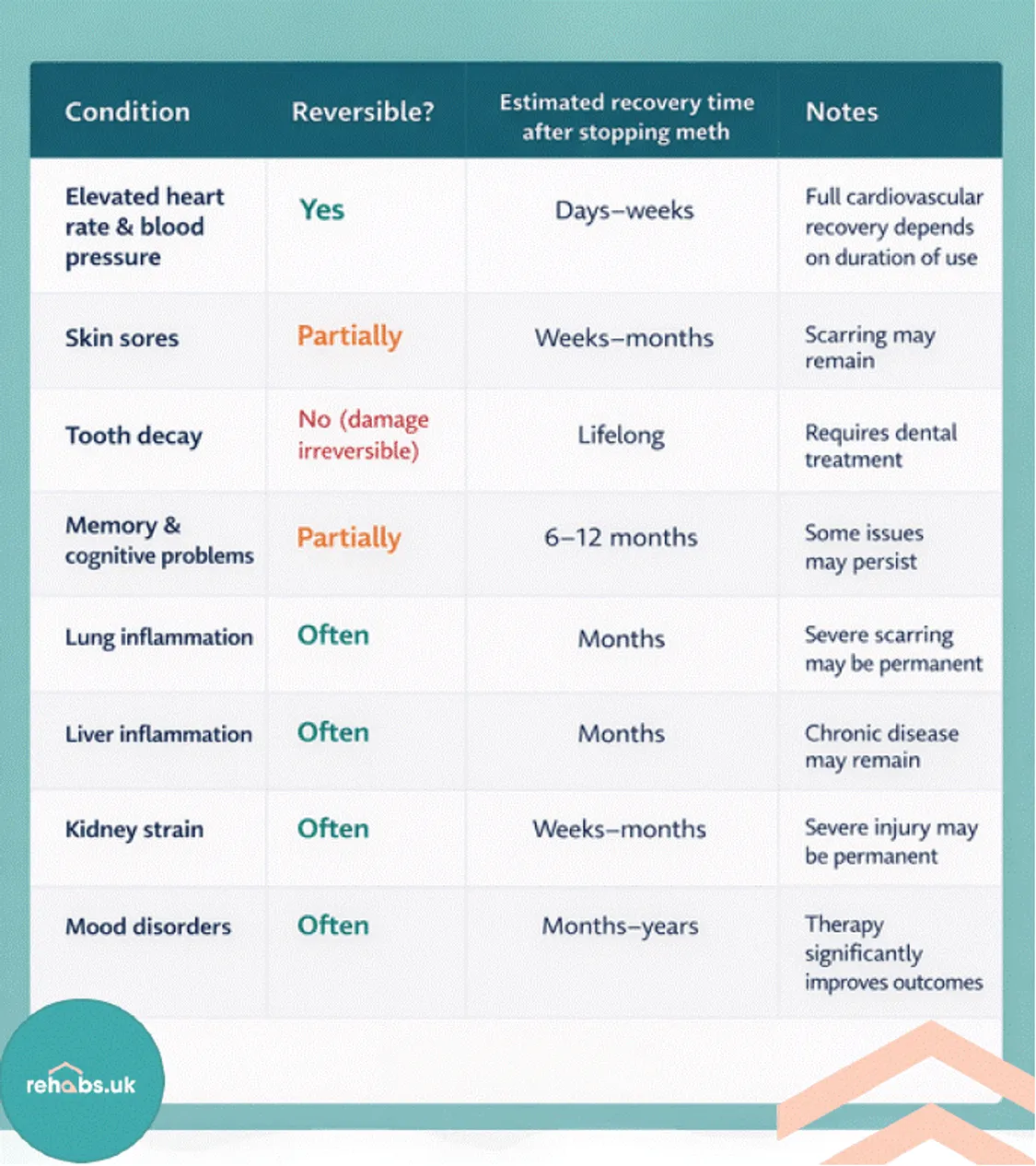
Physical recovery timeline for a Crystal Meth user
Worried about long-term effects? Speak to us
Crystal meth can cause serious and sometimes life-changing physical harm — but recovery is possible. With the right detox plan, medical support, and long-term therapeutic help, much of the body’s damage can heal.
If you or someone you care about is struggling with meth use, you don’t have to face it alone. Our team can guide you through detox options, inpatient and outpatient rehab, and long-term recovery planning.
Bibliography
NHS — Crystal Meth / Drug addiction information and local services.
Office for National Statistics — Drug misuse in England and Wales: year ending March 2025.
UK Government — Adult substance-misuse treatment statistics 2023 to 2024.
EMCDDA / European Drug Report 2024 — methamphetamine profile and European trends.