



04 Apr 2024
Adults with ADHD are almost three times more likely to have a substance abuse disorder than adults without ADHD, even after adjusting for gender and parental education. We believe that those struggling with both ADHD and substance abuse must receive specialist treatment faster, which is why Rehabs UK now offers referrals to the UK’s first specialist addiction treatment services for people with ADHD.
Did you know that:
- Adults with ADHD have a higher prevalence of substance abuse disorder (15.2%) compared to those without ADHD (5.6%).
- Between 33% and 44% of young people with ADHD experience alcohol misuse or dependence, research shows.
- People with ADHD are 5 to 10 times more likely to have alcohol addiction than those without ADHD. About 25% of adults receiving treatment for alcohol and substance abuse also have ADHD.
- ADHD is also associated with a higher risk of developing a gambling problem.
- Research indicates that impulsive and reckless behaviour as well as high novelty seeking traits, which are common symptoms of ADHD, are important risk factors for substance abuse disorders.
- 70% of young adults with both a substance abuse disorder and ADHD report they used substances as a form of “self-medication” rather than to ‘get high’, with women being particularly vulnerable to abusing alcohol as a means of emotional regulation.
Studies have found that children with ADHD have a higher likelihood of developing problems with substance abuse, particularly alcohol. One study found that 40% of children with ADHD began using alcohol at an average age of 14.9 years, compared to 22% of children without ADHD. Additionally, while rates of alcohol use were similar in those aged 25, young adults with ADHD are more likely to use alcohol excessively compared to those without ADHD.
We spoke to the Co-Founder of ADHDadultUK and Visiting Professor at Aston University Dr. James Brown about the reasons for the link between ADHD and substance abuse. He told us: “Many adults with ADHD have issues with impulsive behaviour and risk perception, which may lead to earlier exposure to drugs.
“Beyond this, many adults do report that they ‘self-medicate’ with substances to deal with their ADHD and associated psychiatric issues, with one study reporting more than one-third of adolescents and young adults endorsed using cigarettes and substances for self medication.
“As the brains of people with ADHD often feel like they cannot “switch off,” engaging with substances which either provide dopamine (like nicotine and cocaine) to cause ‘paradoxical calming’, or slowing down of thought processes, or use substances that are intoxicants as these can temporarily relieve much of the internal hyperactivity and repetitive thought patterns which can be distressing.”
As common ADHD medications such as methylphenidate and amphetamines are controlled substances, some people may worry that these can lead to addiction. However, research shows that individuals with ADHD who are being treated with medication are less likely to abuse drugs or alcohol compared to those who are not receiving treatment.
“ADHD diagnosis and access to treatment is essential to battling substance abuse in those with ADHD.” Rehabs UK founder, Lester Morse, says.
While it is difficult to establish exact waiting times for ADHD diagnosis in the NHS, it is widely reported that ADHD services are struggling to keep up with demand. In a recent survey conducted by the House of Commons, 82% of respondents stated that current waiting times for ADHD diagnosis are not adequate. Consequently, many individuals with ADHD may not receive the assistance they require.
It’s estimated that 23% of adults being treated for substance use disorders have ADHD, despite ADHD adults only making up around 3-4% of the general population.
“ADHD symptoms can lead to impulsive behaviour, difficulty concentrating, and problems with organisation and planning. These symptoms can make it challenging for patients to engage in substance abuse treatment, adhere to a treatment plan, and cope with triggers.” Morse goes on to say. “Without appropriate diagnosis and treatment of ADHD, patients continue to struggle with these symptoms, making it more difficult to achieve and maintain sobriety.”
Current guidelines advise that for patients struggling with ADHD and substance abuse disorder, treatment of both conditions should happen simultaneously.
Head Therapist, Jakana says "therapy is always going to be useful whether you have been diagnosed with ADHD or not, for the addiction part...you are able to piece the two together and make connections."
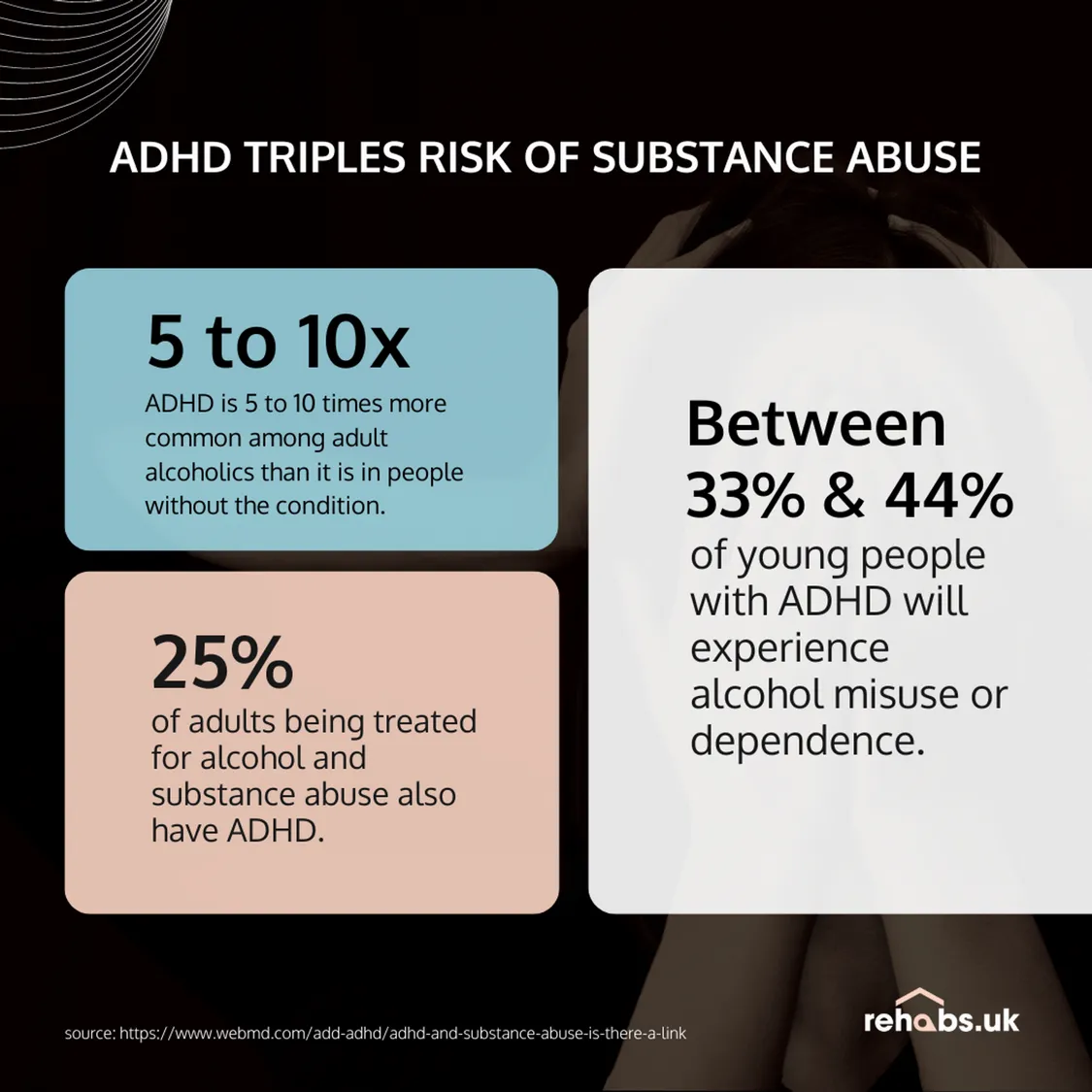
Rehabs UK Infographic of stats on how ADHD triples risk of substance abuse
Here to help
If you or someone you know is struggling with addiction, Rehabs UK is here to help. Rehabs UK is committed to continuing to support those battling alcoholism, drug addictions and behavioural addictions. To access free assessments with trained treatment advisors, contact Rehabs UK here.