01 Apr 2026
It’s no secret that Brits love a bank holiday tipple: from bottomless brunch in spring, to an Aperol spritz in summer, and a mulled wine at Christmas. But which bank holidays are the booziest? Reviewing the estimated monthly alcohol sales in the UK, data reveals that bank holidays get progressively boozier throughout the year.
UK Bank Holiday alcohol sales vs monthly average
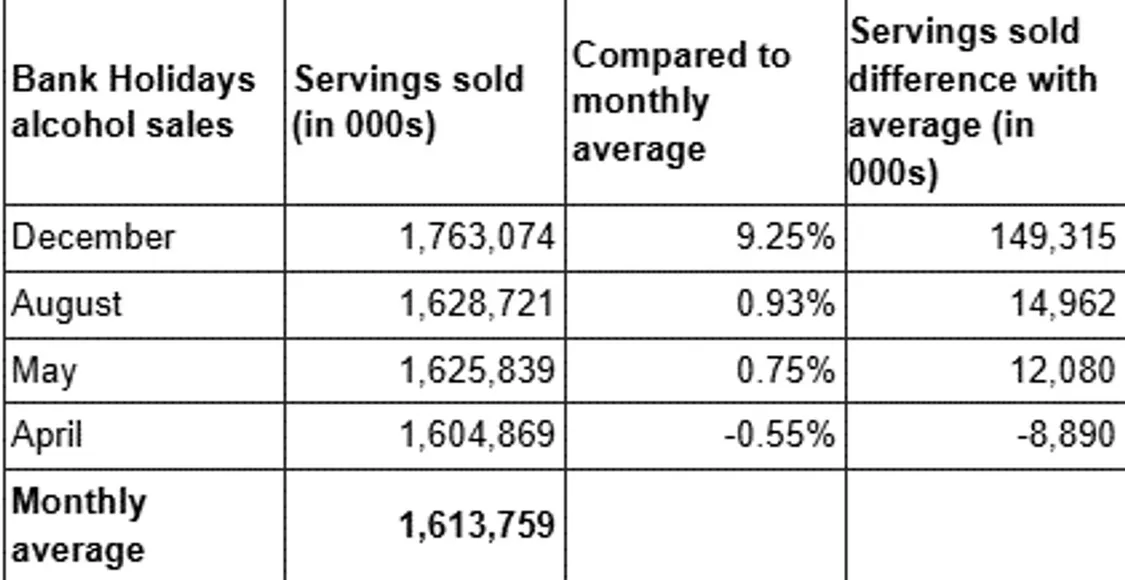
Comparing sales data against the monthly average of approximately 1.6 billion servings, we can see how the UK's drinking habits shift during holiday months:
- April: 0.55% less sales than average, approximately 8.9 million fewer servings sold
- May: 0.75% more sales than average, approximately 12 million more servings sold
- August: 0.93% more sales than average, approximately 15 million more servings sold
- December: 9.25% more sales than average, approximately 149 million more servings sold
Source: International Journal of Drug Policy, see research notes at the end of this article.
Easter is the least boozy
Besides New Year’s Day, Good Friday and Easter Monday are the first bank holidays of the year, and usually fall in April (though sometimes in late March). According to UK alcohol sales data, it is generally the least boozy bank holiday period, with an estimated 8.9 million fewer servings sold than the average month.
However, April is by no means a dry month as this is still roughly 15.8 million more average alcohol servings than the previous month, March.
Searches for hangover cures surge in May
With approximately 12 million more alcohol servings sold than the average month, May is the third booziest bank holiday.
Comparing May to April, which both have two bank holidays, searches for cocktails and cocktail recipes are up 18% and 17%.
Search data suggests that May is not only seeing a spike in celebrations, but it can also be seen as a "danger month" for alcohol-related health issues. Google data shows that searches for ‘alcohol poisoning symptoms’ spike by 22% in May compared to April, and ‘hangover cure’ and related queries jump by 20%, which indicates more intensive binge-drinking behaviours as the weather warms.
As 26% more people search for a ‘hangover cure’ in May than in the average month, we must note that the best cure for a hangover is prevention.
The second booziest: August
Brits love drinking outdoors, with pubs reporting better sales figures when the weather is good. While the Christmas period is the booziest of all, August is the booziest of the rest of the year, with approximately 15 million more alcohol servings sold than in the average month.
Drinking in pubs and bars seems to be particularly popular, with searches for ‘pub near me’ and ‘bar near me’ up 39% and 36% compared to the average month, respectively.
December tops the chart
With almost 150 million more estimated alcohol servings than the average month, December decidedly tops the list.
Searches for all ‘alcohol’ related queries are 25% higher than the average month, with interest in deals and promotions driving ‘booze offers’ searches 121% higher than usual.
Christmas is a challenging time for some, with social and family pressures as well as a large focus on boozy celebrations. If this sounds familiar, Rehabs UK has put together a guide for those struggling with alcohol over Christmas.
Regional red zones: The North East and West Midlands
- Alcohol-related harm is disproportionately concentrated in the northern regions of the UK.
- The North East remains the highest risk area with 737.4 alcohol-related admissions per 100,000 residents, followed closely by the West Midlands (607.3).
- According to The Institute of Alcohol Studies, the local authority budget estimated to be attributable to alcohol is highest in the North East: £562 cost per head.
- North Tyneside (890), Stoke-on-Trent (861), and Sunderland (843) are the top three areas for alcohol-related hospital episodes, with rates nearly double the national average (504).
Risks of binge drinking normalisation
"Because drinking is so deeply ingrained in our celebrations, it can often mask the early signs of dependency," says Lester Morse, Rehabs UK Founder and Director.
With "boozy nights out" seen to be socially acceptable during these long weekends, dangerous behaviours, like drinking to the point of blackout, can be dismissed as just having a good time. This normalisation makes it harder for someone to recognise when their relationship with alcohol has shifted from social to a dependency.
Lester stresses that you don't have to be an alcoholic to suffer alcohol-related harms. In fact, many people who die from alcohol-related diseases are everyday people who regularly exceed the recommended maximum. Government guidance highlights that the risk of developing a range of illnesses increases with any amount you drink on a regular basis.
Bank holiday drinker profiles
Understanding your drinking pattern is the first step in assessing risk.
1. The casual drinker - under 14 units a week, no binge drinking
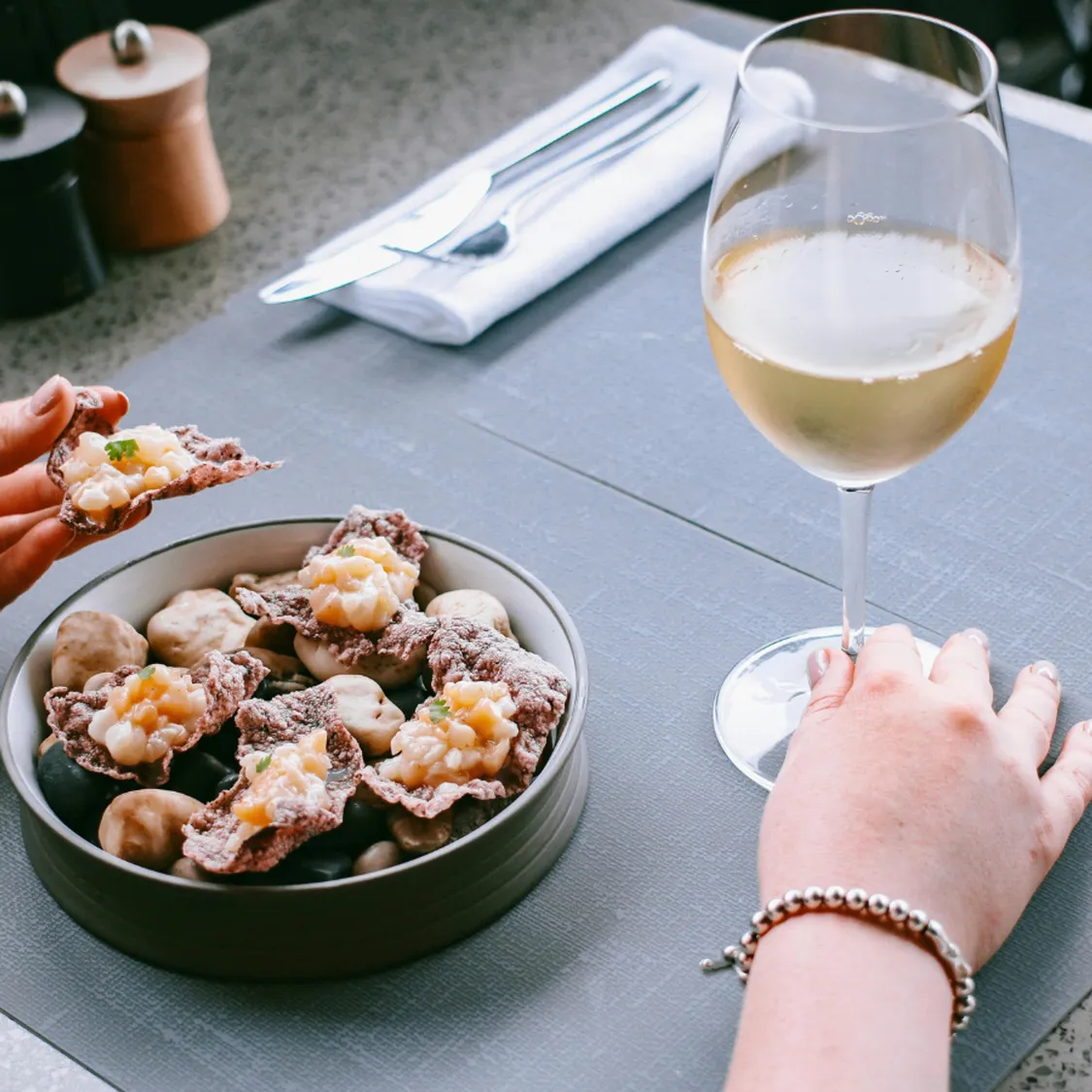
Someone who drinks less than 14 units a week on average, and generally doesn’t participate in binge drinking.
2. The social drinker - under 14 units a week
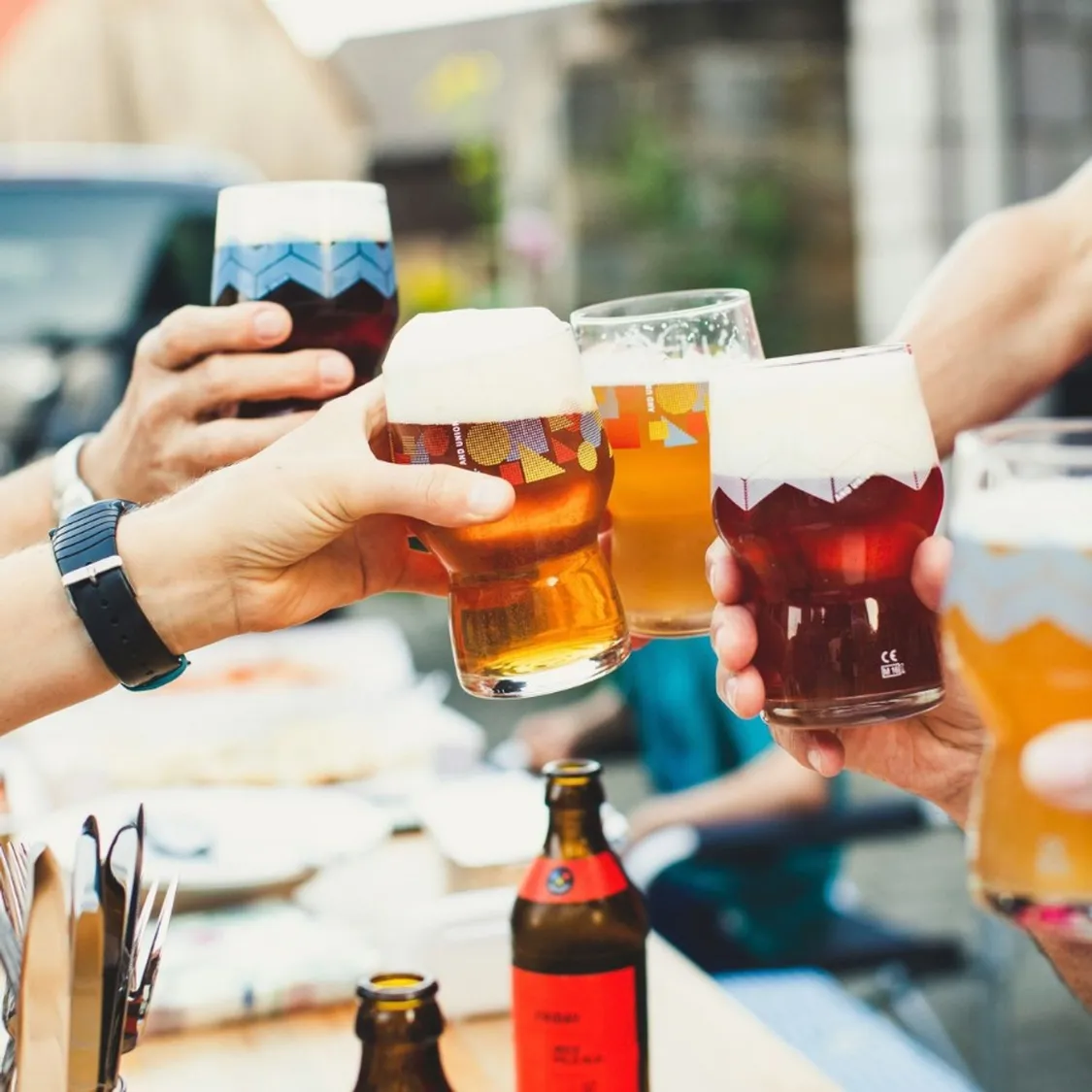
This drinker generally stays under 14 units a week, but will occasionally have a binge drinking session. While this drinker is less likely to face long-term alcohol-related harm than those with heavier drinking patterns, a pattern of heavy drinking on a small number of days increases risks to health. Drinking just five to seven units in one session can increase the risk of short-term injury two- to five-fold (UK Chief Medical Officers’ Alcohol Guidelines Review).
3. The unhealthy drinker - over 14 units a week regularly

Drinking more than 14 units of alcohol per week frequently is more easily done than it may seem. This can for example be one small glass of wine per night, or a couple of pints of strong lager on each weekend day.
Regularly going over the recommended alcohol intake limit increases your risk of a range of illnesses (including, for example, cancers of the mouth, throat and breast). (UK Chief Medical Officers’ Alcohol Guidelines Review).
4. The binge drinker - over six to eight units per session frequently

Those who like to celebrate bank holidays, weekends, or paydays by having lots of drinks in one session. A binge is generally defined as more than six units of alcohol in a single session for women, and over eight units for men.
Frequent binge drinking is associated with increased short- and long-term. alcohol-related harms.
5. The heavy drinker - drinking daily, or binge drinking weekly

Heavy drinkers are daily drinkers, or those who engage in binge drinking behaviour on a weekly basis, who have developed an unhealthy dependency on alcohol. This person no longer needs celebrations to justify drinking, but it is part of day-to-day life and habits.
This sustained high volume of alcohol intake not only increases risks of all alcohol-related health problems, it’s also likely to affect people around such as friends and family.
6. The alcoholic - unable to ‘function’ without alcohol

This stage marks the difference between an unhealthy dependency and an addiction. The person may no longer be able to imagine a life without alcohol, and often plans their day-to-day activities around the availability of a drink. For someone who is addicted, it is very hard to address an unhealthy relationship with alcohol or avoid getting worse without professional help.
Lester warns that bank holiday bingeing can cause longer-term harms than just the hangover: "If you regularly exceed 14 units a week, you should monitor how your body responds once the alcohol wears off.
“If you’re experiencing alcohol-related symptoms like persistent heartburn, heart palpitations, or even frequent colds, your immune system and organs may be under significant stress. If you notice more severe signs, such as jaundice or dark urine, you need to seek professional advice immediately."
For more information and support, read the alcohol misuse page on the NHS website, or our alcohol addiction information here.
How to keep it fun this bank holiday
To enjoy the long weekend without the debilitating hangover or health risks, consider these tips:
- Set a limit: Decide how many units you will have before you start drinking.
- Hydrate: Alternate every alcoholic drink with a glass of water or a non-alcoholic option to prevent dehydration.
- Eat first: Never drink on an empty stomach; a substantial meal slows alcohol absorption.
- Track your units: Use an app or a diary to see how much you are actually consuming.
If you recognise yourself or a loved one in the "Heavy Drinker" or "Alcoholic" profiles, remember it is very difficult to address an unhealthy relationship with alcohol without professional support. We encourage anyone struggling with dependency to reach out for a confidential consultation.
Research notes
UK Bank Holiday alcohol sales vs monthly average
- Source: Moolla et al, International Journal of Drug Policy, Volume 145, 2025, 104939
- The article includes data on average monthly alcohol sales between 2020 and 2023.
- As the article focuses on Dry January, all monthly figures are expressed as a difference with January (in 000s).
- We inferred January’s approximate monthly figure from fig. 2., which is 1,500,000. This means that our calculations are approximations.
- We then calculated the actual monthly numbers by adding January to each month.
- Then, we calculated the monthly average. From here, we could compare each month to the monthly average.
- We checked industry news reports to verify whether the calculated average annual number of servings (19.365 billion) is reasonable.
The Drinks Business reports that 8.5 billion pints of beer were sold in 2018, as well as 7.4 billion glasses of wine.
Bank holiday alcohol sales
Search data
- Google Keyword Planner average monthly UK searches in 2025. Data gathered in February 2026.
Regional alcohol-related hospital admissions
Department of Health & Social Care, Fingertips Public Health Profiles, Alcohol Profile
- Data view: Compare areas
- Topic: Hospital admissions
- Area type: Counties & UAs
- Group type: England